
• About Real Estate Wisdom
  • Blog of Wisdom
  • Testimonials
  • Contact

Atlanta Real Estate Wisdom

~ the source for Atlanta real estate expertise

Atlanta Real Estate Wisdom

Tag Archives: mortgage loan

The Wonderful World of Atlanta Mortgage Lending

08 Thursday Sep 2016

Posted by Mary Anne Walser, REALTOR in real estate

≈ Leave a comment

Tags

atlanta, Atlanta Metro, buyer, buying, buying a home, buying process, home buyer, home buying, interest rates, lender, lending, mortgage, mortgage loan, real estate, underwriting

20160907_110905

The Wonderful World of Atlanta Mortgage Lending

Mary Anne Walser, Realtor & Attorney, 404-277-3527, maryannesellshomes@gmail.com

Tony was a first time homebuyer. He balked at my requirement that buyers be prequalified by a lender before we go out looking at property. “I don’t want to share my personal financial information,” he said. “Well,” I laughed, “welcome to the world of mortgage lending.” Not only your personal financial information, but lots of information that you think would not even be relevant to the purchase of property must be shared with strangers (the mortgage banker and staff).

I always prepare buyers for the fact that they will be asked for a LOT of information. I joke that the lender will even ask them for their third grade report card (being particularly interested in their math scores). A recent buyer – Mia – called me up laughing one day. “You remember when you said they’d ask for my third grade report card? Well, you were almost right. The lender wants my college transcripts!” Now, Mia was well out of college and fully ensconced in her current job for at least two years. But this is just an illustration that there is no telling what the lender is going to ask to see. The best I can do for you is prepare you so you aren’t surprised. Get together everything that the lender will likely need (see the list below), but then be ready that they may ask for much much more. Like your third grade report card.

Here are some of the documents you should have ready for your lender:

  • W-2 forms from the previous two years, if you collect a paycheck.
  • Profit and loss statements or 1099 forms, if you own a business or are an independent contractor.
  • Recent paycheck stubs.
  • Most recent federal tax return, and possibly the last two tax returns.
  • A complete list of your debts, such as credit cards, student loans, car loans and child support payments, along with minimum monthly payments and balances.
  • List of assets, including bank statements, mutual fund statements, real estate and automobile titles, brokerage statements and records of other investments or assets.
  • Canceled checks for your rent or mortgage payments.

This is by no means an exhaustive list. If you have had credit problems or a complicated work history, be prepared to produce even more documents. And the requests just keep coming, sometimes right up to and on the day of closing. The lender may also pull your credit report again right before closing. That’s why we tell you not to make major purchases between loan application and close. WAIT to buy your new furniture and a new car. Big purchases on credit might disqualify you for the loan because they disrupt your income/debt ratio.

So why the need for all this information, borrower laid bare before the mortgage altar? Remember that the lender is giving you a great deal of money to purchase a home. Back in 2006-2008, they were giving money much much too freely. Back then there were even what were called “stated income loans,” where the bank would pull your credit score, ask you what your income was (without any verification requirement) and give you a loan based solely on your credit and what you claimed that you made. You can see where lots of borrowers got into trouble with this. I personally saw real estate agents who I knew did not make a lot of money purchasing huge houses, thinking that they’d be able to resell them at a profit. When the homes didn’t resell, they defaulted. This happened with borrowers of all professions on a national scale – hence the mortgage meltdown.

So now things have tightened up quite a bit, and the documentation requirements are once again onerous. There’s a person called the “underwriter” who you may label the “undertaker” before all is said and done. Your loan officer gathers the preliminary information from you, then hands the file over to the underwriter, whose job it is to “underwrite” the loan. This means that they make sure it conforms with the relevant guidelines and that it is a loan that is likely to be repaid. They require any and all relevant documentation (and some that certainly seems irrelevant) to satisfy the lender that you have the ability to and will repay the loan.

So call a lender and be prepared for the onslaught of requests. Now, let’s talk about the types of lenders. You can call a direct mortgage lender or a mortgage broker – the difference is that a direct lender is lending you money they control. A mortgage broker is shopping around for a loan and is lending you someone else’s money. So a direct lender will usually have more control over the process (through the underwriter, in particular) and the mortgage broker can shop around, but will not have a lot of control over the loan once they choose one for you. I have favorite direct mortgage lenders AND favorite mortgage brokers (call me if you want a referral!) It is just a matter of finding someone experienced and fair.

Most of my buyer/borrowers these days do a 30-year conventional loan, twenty percent down. Interest rates are still so low – I definitely do NOT recommend doing an ARM (“Adjustable Rate Mortgage”). With an ARM, you have a fixed rate for some period of years – three, five or seven – and then when the ARM expires the interest rate resets to a formula based upon the prevailing rates at the time. Since interest rates are SO low now and likely to rise, you would be better off just signing up for one continuous interest rate over years. What if you think you will move before the ARM expires? The ARM rate is generally lower than the conventional loan rate, so that is tempting. But consider that you may change your mind about moving OR about selling. When I purchased my first home, I used a seven-year ARM, convinced that I would move before the seven years were up. I didn’t! But rates were lower at the seven year mark and I refinanced to a 15 year loan instead. And I still own that property (now as a rental). If rates had gone UP, I would have been quite sorry that I had chosen an ARM instead of a fixed rate mortgage.

Find a lender you know and trust, and sit down with them and talk through the wonderful world of mortgage lending and what is best for you. Then let’s go find your home!


Mary Anne Walser is a licensed attorney and full-time REALTOR, serving buyers and sellers in all areas of Metro Atlanta. Her knowledge of residential real estate and her legal expertise allow her to offer great value to her clients. Mary Anne s a member of the Atlanta Board of Realtors, the Georgia Association of Realtors, the State Bar of Georgia and the Georgia Association of Women Lawyers. Contact Mary Anne at 404-277-3527, or via email: maryannesellshomes@gmail.com.


Share this:

  • Click to share on Facebook (Opens in new window) Facebook
  • Click to share on LinkedIn (Opens in new window) LinkedIn
  • Click to share on X (Opens in new window) X
  • Click to email a link to a friend (Opens in new window) Email
  • Click to print (Opens in new window) Print
  • Click to share on WhatsApp (Opens in new window) WhatsApp
  • More
  • Click to share on Reddit (Opens in new window) Reddit
Like Loading...

Chicken Little Goes to Closing

06 Thursday Aug 2015

Posted by Mary Anne Walser, REALTOR in real estate

≈ Leave a comment

Tags

atlanta, attorney, closing, disclosure, home buying, home selling, lender, lenders, mortgage, mortgage loan, real estate, realtor

HUD

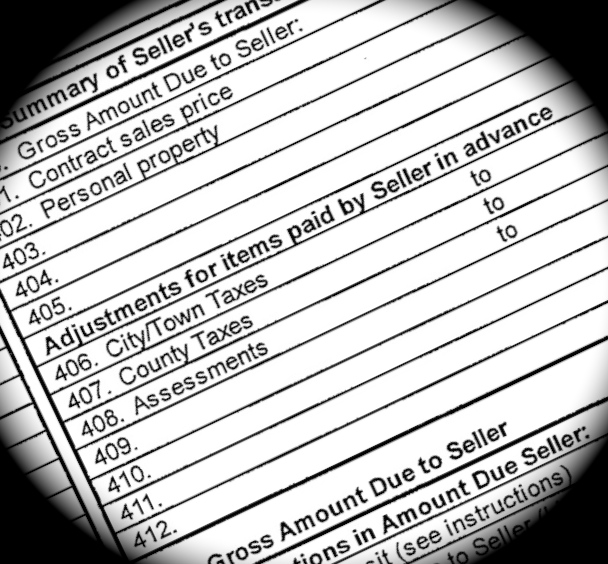
The sky is falling! To hear lenders and closing attorneys tell it, the world as we know it comes to an end on October 3rd. That’s the day new regulations come into effect that govern the mortgage lending and closing process. Whether or not there’s mass bedlam, there are certainly changes that buyers and sellers of property should be aware of and prepared for, so this article will summarize them.

To understand how things are changing, it is important to know how the world works now. Today, sometimes the loan and closing statement will change the day of closing or even while parties are sitting at the closing table. Starting in October, that cannot and will not be possible anymore, at least as to every mortgage application received October 3, 2015 or later. The new rules require that a new document, the Loan Estimate, must be provided to the borrower within three days after loan application, and another new document, the Closing Disclosure, must be provided to the borrower at least three business days prior to closing. These apply to any mortgage loans with no exceptions. If there are changes to the deal, a new disclosure must be provided and the three-day waiting period starts all over. While previously the settlement statement was provided by the closing attorney and often at the last minute, with the new regulations the lenders themselves will likely be providing the statement directly to the borrower and they must confirm and document receipt by the consumer.

You can see how this can potentially cause big problems. “Stacked closings” are common now, in which the seller of one property uses those proceeds to purchase a new property in the next hour from a seller who may the following hour be buying a new property of their own. These back-to-back closings dependent upon one another for consummation are already tenuous at times. Imagine what the new three-day waiting requirement may do! So in practical effect and application, we Realtors must advise our clients of the following:

  • Delays are much more likely, particularly in the early days of implementation of the new regulations.
  • A seller will want to negotiate possession some number of days AFTER closing. While this has always been the case for a seller still living in the property they are selling, now it becomes even more crucial.
  • A buyer will want to commit to a lender as soon as possible in order to attempt to limit any delays. A buyer will want to be sure they choose a lender fully conversant with the new regulations and a lender who has a system in place to comply.
  • While some lenders can get a loan through underwriting and closed quickly, every loan is going to take longer with these new requirements, particularly at first. A cushion of 45 days between contract and close is advisable.
  • From a Realtor’s standpoint, any and all provisions of the contract should be tied up as early as possible. In particular, if there are monetary concessions during the due diligence period, those should be provided to the lender as soon and as early as possible. Even changes in the Realtor’s commission are part of the disclosure process and should be wrapped up as early in the process as possible.
  • While lenders are the primary front line, closing attorneys must also be in line with the new regulations. It is advisable to look for a closing attorney who does residential real estate closings regularly, has systems in place, and preferably is ALTA (American Land Title Association) best practices certified.

The new disclosures are designed to help consumers better understand the terms and costs of their mortgage loan; however, in one aspect the new disclosures are more confusing. The new rule prohibits lenders from disclosing a reduction that is commonly offered by the title insurance companies when a lender’s title policy and the borrower’s title policy are issued at the same time. Instead, there’s one lump sum disclosed; at closing the cost will actually be *less*. While that might result in a pleasant surprise for some at closing, those borrowers who are watching closely will likely be more confused about what, exactly, the title insurance is actually going to cost them at closing.

The home sale and purchase process can be confusing enough. If you are planning to make a move this year, be sure you plan for these new regulations and have trusted advisors guiding you through the process.

Mary Anne Walser is a licensed attorney and full-time REALTOR, serving buyers and sellers in all areas of Metro Atlanta. Her knowledge of residential real estate and her legal expertise allow her to offer great value to her clients. Mary Anne serves on the Committee that drafts and reviews the contracts utilized by all REALTORS in the State of Georgia. In addition, she is a member of the Atlanta Board of Realtors, the Georgia Association of Realtors, the State Bar of Georgia and the Georgia Association of Women Lawyers. Contact Mary Anne at 404-277-3527, or via email: maryannesellshomes@gmail.com.

Share this:

  • Click to share on Facebook (Opens in new window) Facebook
  • Click to share on LinkedIn (Opens in new window) LinkedIn
  • Click to share on X (Opens in new window) X
  • Click to email a link to a friend (Opens in new window) Email
  • Click to print (Opens in new window) Print
  • Click to share on WhatsApp (Opens in new window) WhatsApp
  • More
  • Click to share on Reddit (Opens in new window) Reddit
Like Loading...

HOW MUCH MONEY DO I NEED BEFORE I BEGIN LOOKING FOR A HOUSE?

20 Thursday Oct 2011

Posted by Mary Anne Walser, REALTOR in real estate

≈ Leave a comment

Tags

down payment, home buyer, home buying, inspection, mortgage loan, radon

I try to find some fun, interesting topics for blog posts – this one is a little dry, but important!  I will sneak in a few of these here and there, just for variety – and because, like vegetables, they’re good for us. 


I find that new homebuyers are confused about how much money they should have in hand BEFORE they begin looking for their dream home.  A quick answer is – call your lender !  They can give you a good idea of what price home you can buy, and how much in reserve you should have before you begin looking.  My favorite mortgage lender – the one I use most often and who will do my loan when I purchase a home – is Carlisle Dent of Fidelity Bank Mortgage.  Tell him I told you to call and he’ll be happy to discuss it with you. 


But if you’re just “thinking about it” at this point,  or just want a general idea, here we go:


Generally, the largest chunk of dough you should have in advance is your DOWN PAYMENT.  The down payment varies depending on the type of financing you are using, your monthly payment and the price of the home you are purchasing.   It is a percentage of the purchase price, and that percentage depends on the financing you receive. It is possible to pay as little as 5% down, but in a more traditional situation, you would be putting about 20% down.  Government loans require a smaller down payment – I have seen (even in this tough lending environment!) no money down (from the buyer) loans.  But since the mortgage meltdown, those are very few and far between.  The more you put down, the more lenient your lender can be on underwriting issues.  Plan on no more than twenty percent of the purchase price – but most of my buyers these days put twenty percent down.


Saving enough money for a down payment can seem like an unreachable goal for some. Remember though, if you already own a house, you can use your home equity toward a down payment on a new house. If you are a first time home buyer, start a savings program if you have not already. Also, a lot of first time home buyers receive help from parents and relatives for the purchase of their first time. Consider asking!  It’s a good, effective mode of wealth transfer at a time when you most need it.  If you DO go this route, know that there are special rules relating to when that money needs to come to you.  Some loans will require that the funds are in YOUR account for a certain amount of time.  Check into that FIRST if this is your plan, so that you know you are conforming to those rules. 


Also, some builders of new homes will consider “sweat equity” in their selling price. This means that they will reduce the price and let you do some of the work (like painting) yourself.  There are even more strategies to get your down payment lower, such as using a co-borrower or seller take-backs.

Share this:

  • Click to share on Facebook (Opens in new window) Facebook
  • Click to share on LinkedIn (Opens in new window) LinkedIn
  • Click to share on X (Opens in new window) X
  • Click to email a link to a friend (Opens in new window) Email
  • Click to print (Opens in new window) Print
  • Click to share on WhatsApp (Opens in new window) WhatsApp
  • More
  • Click to share on Reddit (Opens in new window) Reddit
Like Loading...

  • Mary Anne Walser, REALTOR's avatar

Archives

  • June 2022 (1)
  • February 2022 (1)
  • April 2021 (1)
  • February 2021 (1)
  • August 2020 (1)
  • June 2020 (1)
  • February 2020 (1)
  • October 2019 (1)
  • January 2019 (1)
  • December 2018 (1)
  • November 2018 (1)
  • September 2018 (1)
  • August 2018 (1)
  • June 2018 (2)
  • April 2018 (1)
  • March 2018 (1)
  • February 2018 (1)
  • January 2018 (1)
  • November 2017 (1)
  • October 2017 (1)
  • September 2017 (1)
  • August 2017 (1)
  • July 2017 (1)
  • June 2017 (2)
  • February 2017 (1)
  • January 2017 (2)
  • November 2016 (2)
  • October 2016 (1)
  • September 2016 (2)
  • August 2016 (1)
  • July 2016 (1)
  • June 2016 (3)
  • May 2016 (3)
  • April 2016 (2)
  • March 2016 (1)
  • January 2016 (1)
  • December 2015 (1)
  • November 2015 (1)
  • October 2015 (2)
  • August 2015 (1)
  • June 2015 (1)
  • March 2015 (1)
  • February 2015 (2)
  • December 2014 (1)
  • August 2014 (1)
  • June 2014 (2)
  • January 2014 (3)
  • December 2013 (2)
  • September 2013 (1)
  • August 2013 (1)
  • July 2013 (2)
  • June 2013 (1)
  • April 2013 (1)
  • March 2013 (3)
  • February 2013 (3)
  • January 2013 (2)
  • November 2012 (2)
  • October 2012 (1)
  • August 2012 (2)
  • July 2012 (1)
  • May 2012 (1)
  • April 2012 (2)
  • March 2012 (3)
  • February 2012 (3)
  • January 2012 (2)
  • December 2011 (2)
  • November 2011 (3)
  • October 2011 (3)
  • September 2011 (3)
  • August 2011 (6)

Recent Posts

  • Where Sellers Go
  • 2022 A (real estate) Space Odyssey & Oddities
  • Renovate or Relocate!?
  • OWNING A PIECE OF ATLANTA HISTORY
  • Your Atlanta Pandemic Real Estate Plan

Enter your email address to subscribe to this blog and receive notifications of new posts by email.

Join 4,045 other subscribers
  • RSS - Posts
Follow Atlanta Real Estate Wisdom on WordPress.com

Mary Anne Walser, Realtor & Licensed Attorney

Keller Williams Realty
3650 Habersham Rd.
Atlanta, GA 30305
404-277-3527

Blog at WordPress.com.

  • Subscribe Subscribed
    • Atlanta Real Estate Wisdom
    • Join 82 other subscribers
    • Already have a WordPress.com account? Log in now.
    • Atlanta Real Estate Wisdom
    • Subscribe Subscribed
    • Sign up
    • Log in
    • Report this content
    • View site in Reader
    • Manage subscriptions
    • Collapse this bar
 

Loading Comments...
 

    %d