
• About Real Estate Wisdom
  • Blog of Wisdom
  • Testimonials
  • Contact

Atlanta Real Estate Wisdom

~ the source for Atlanta real estate expertise

Atlanta Real Estate Wisdom

Tag Archives: lender

The Wonderful World of Atlanta Mortgage Lending

08 Thursday Sep 2016

Posted by Mary Anne Walser, REALTOR in real estate

≈ Leave a comment

Tags

atlanta, Atlanta Metro, buyer, buying, buying a home, buying process, home buyer, home buying, interest rates, lender, lending, mortgage, mortgage loan, real estate, underwriting

20160907_110905

The Wonderful World of Atlanta Mortgage Lending

Mary Anne Walser, Realtor & Attorney, 404-277-3527, maryannesellshomes@gmail.com

Tony was a first time homebuyer. He balked at my requirement that buyers be prequalified by a lender before we go out looking at property. “I don’t want to share my personal financial information,” he said. “Well,” I laughed, “welcome to the world of mortgage lending.” Not only your personal financial information, but lots of information that you think would not even be relevant to the purchase of property must be shared with strangers (the mortgage banker and staff).

I always prepare buyers for the fact that they will be asked for a LOT of information. I joke that the lender will even ask them for their third grade report card (being particularly interested in their math scores). A recent buyer – Mia – called me up laughing one day. “You remember when you said they’d ask for my third grade report card? Well, you were almost right. The lender wants my college transcripts!” Now, Mia was well out of college and fully ensconced in her current job for at least two years. But this is just an illustration that there is no telling what the lender is going to ask to see. The best I can do for you is prepare you so you aren’t surprised. Get together everything that the lender will likely need (see the list below), but then be ready that they may ask for much much more. Like your third grade report card.

Here are some of the documents you should have ready for your lender:

  • W-2 forms from the previous two years, if you collect a paycheck.
  • Profit and loss statements or 1099 forms, if you own a business or are an independent contractor.
  • Recent paycheck stubs.
  • Most recent federal tax return, and possibly the last two tax returns.
  • A complete list of your debts, such as credit cards, student loans, car loans and child support payments, along with minimum monthly payments and balances.
  • List of assets, including bank statements, mutual fund statements, real estate and automobile titles, brokerage statements and records of other investments or assets.
  • Canceled checks for your rent or mortgage payments.

This is by no means an exhaustive list. If you have had credit problems or a complicated work history, be prepared to produce even more documents. And the requests just keep coming, sometimes right up to and on the day of closing. The lender may also pull your credit report again right before closing. That’s why we tell you not to make major purchases between loan application and close. WAIT to buy your new furniture and a new car. Big purchases on credit might disqualify you for the loan because they disrupt your income/debt ratio.

So why the need for all this information, borrower laid bare before the mortgage altar? Remember that the lender is giving you a great deal of money to purchase a home. Back in 2006-2008, they were giving money much much too freely. Back then there were even what were called “stated income loans,” where the bank would pull your credit score, ask you what your income was (without any verification requirement) and give you a loan based solely on your credit and what you claimed that you made. You can see where lots of borrowers got into trouble with this. I personally saw real estate agents who I knew did not make a lot of money purchasing huge houses, thinking that they’d be able to resell them at a profit. When the homes didn’t resell, they defaulted. This happened with borrowers of all professions on a national scale – hence the mortgage meltdown.

So now things have tightened up quite a bit, and the documentation requirements are once again onerous. There’s a person called the “underwriter” who you may label the “undertaker” before all is said and done. Your loan officer gathers the preliminary information from you, then hands the file over to the underwriter, whose job it is to “underwrite” the loan. This means that they make sure it conforms with the relevant guidelines and that it is a loan that is likely to be repaid. They require any and all relevant documentation (and some that certainly seems irrelevant) to satisfy the lender that you have the ability to and will repay the loan.

So call a lender and be prepared for the onslaught of requests. Now, let’s talk about the types of lenders. You can call a direct mortgage lender or a mortgage broker – the difference is that a direct lender is lending you money they control. A mortgage broker is shopping around for a loan and is lending you someone else’s money. So a direct lender will usually have more control over the process (through the underwriter, in particular) and the mortgage broker can shop around, but will not have a lot of control over the loan once they choose one for you. I have favorite direct mortgage lenders AND favorite mortgage brokers (call me if you want a referral!) It is just a matter of finding someone experienced and fair.

Most of my buyer/borrowers these days do a 30-year conventional loan, twenty percent down. Interest rates are still so low – I definitely do NOT recommend doing an ARM (“Adjustable Rate Mortgage”). With an ARM, you have a fixed rate for some period of years – three, five or seven – and then when the ARM expires the interest rate resets to a formula based upon the prevailing rates at the time. Since interest rates are SO low now and likely to rise, you would be better off just signing up for one continuous interest rate over years. What if you think you will move before the ARM expires? The ARM rate is generally lower than the conventional loan rate, so that is tempting. But consider that you may change your mind about moving OR about selling. When I purchased my first home, I used a seven-year ARM, convinced that I would move before the seven years were up. I didn’t! But rates were lower at the seven year mark and I refinanced to a 15 year loan instead. And I still own that property (now as a rental). If rates had gone UP, I would have been quite sorry that I had chosen an ARM instead of a fixed rate mortgage.

Find a lender you know and trust, and sit down with them and talk through the wonderful world of mortgage lending and what is best for you. Then let’s go find your home!


Mary Anne Walser is a licensed attorney and full-time REALTOR, serving buyers and sellers in all areas of Metro Atlanta. Her knowledge of residential real estate and her legal expertise allow her to offer great value to her clients. Mary Anne s a member of the Atlanta Board of Realtors, the Georgia Association of Realtors, the State Bar of Georgia and the Georgia Association of Women Lawyers. Contact Mary Anne at 404-277-3527, or via email: maryannesellshomes@gmail.com.



Share this:

  • Click to share on Facebook (Opens in new window) Facebook
  • Click to share on LinkedIn (Opens in new window) LinkedIn
  • Click to share on X (Opens in new window) X
  • Click to email a link to a friend (Opens in new window) Email
  • Click to print (Opens in new window) Print
  • Click to share on WhatsApp (Opens in new window) WhatsApp
  • More
  • Click to share on Reddit (Opens in new window) Reddit
Like Loading...

No Need to Cork the Bubbly – Let’s Celebrate the Recovery

16 Friday Oct 2015

Posted by Mary Anne Walser, REALTOR in real estate

≈ 1 Comment

Tags

atlanta, home buyer, inventory, lender, market, mortgage, price, real estate, sellers

champagne-300x300

After the dismal housing recession in Atlanta (and everywhere) that hit in 2008 and sent housing prices on a sharp decline,  prices finally started to stabilize in late 2014 and have risen ever since.  Having just emerged from the doldrums to a rapid rise in pricing, some experts are declaring a new “housing bubble”; but reports of the imminent death of the rising residential market are greatly exaggerated.

In Atlanta, we took longer to sink during the recession and have been slower to rise in the recovery.  Right now we have a shortage of inventory but our prices still are not rising as quickly as they are in many cities.  This measured response to the national trends bodes well for us; as does the fact that so many companies are bringing headquarters and employees to Atlanta.  We have more buyers moving here, which will naturally put upward pressure on pricing, but which will serve to continue to support that pricing in the coming years as they continue to live and work in Atlanta.

In addition, as more sellers receive the news that housing prices are rising and that they ARE able to sell and make a profit, more are putting their homes on the market.  This additional inventory is helping to reduce the number of competitive bid situations and to stabilize the rapid rise in pricing.

Further, it was a very loose mortgage lending environment that contributed to the original housing bubble.  It was far too easy to get a mortgage at that time.   That loose mortgage environment ground to a screeching halt in 2009 and it is still difficult today to secure a mortgage.  The strict underwriting guidelines that were implemented following the “mortgage meltdown” are still in place, meaning that the torrent of unqualified buyers that precipitated the initial crisis are nowhere to be found and are, hopefully, never to return.  Banks are lending only to qualified buyers with good credit scores who are less likely to default on their mortgage loans.  Interest rates are still low right now, but are likely to rise, which will create yet another governor on the ability of buyers to purchase and the ability of sellers to ask ever increasing prices.

After fifteen years in the business, I have seen a lot of ups and downs in the housing market.  This particular recovery, while fast, has not spun out of control and is unlikely to do so.   While it’s always prudent for a buyer to carefully review the sales of comparable properties and to research the  neighborhood and factors contributing to that neighborhood’s potential before agreeing on price, and although that price is going to be higher than it was three to five years ago, there’s no need to panic or to cork the bubbly over a housing “bubble”.  Rather, we should continue to celebrate the housing recovery.

Mary Anne Walser is a licensed attorney and full-time REALTOR, serving buyers and sellers in all areas of Metro Atlanta. Her knowledge of residential real estate and her legal expertise allow her to offer great value to her clients. Mary Anne serves on the Committee that drafts and reviews the contracts utilized by all REALTORS in the State of Georgia. In addition, she is a member of the Atlanta Board of Realtors, the Georgia Association of Realtors, the State Bar of Georgia and the Georgia Association of Women Lawyers. Contact Mary Anne at 404-277-3527, or via email: maryannesellshomes@gmail.com.
Share this:

  • Click to share on Facebook (Opens in new window) Facebook
  • Click to share on LinkedIn (Opens in new window) LinkedIn
  • Click to share on X (Opens in new window) X
  • Click to email a link to a friend (Opens in new window) Email
  • Click to print (Opens in new window) Print
  • Click to share on WhatsApp (Opens in new window) WhatsApp
  • More
  • Click to share on Reddit (Opens in new window) Reddit
Like Loading...

Chicken Little Goes to Closing

06 Thursday Aug 2015

Posted by Mary Anne Walser, REALTOR in real estate

≈ Leave a comment

Tags

atlanta, attorney, closing, disclosure, home buying, home selling, lender, lenders, mortgage, mortgage loan, real estate, realtor

HUD

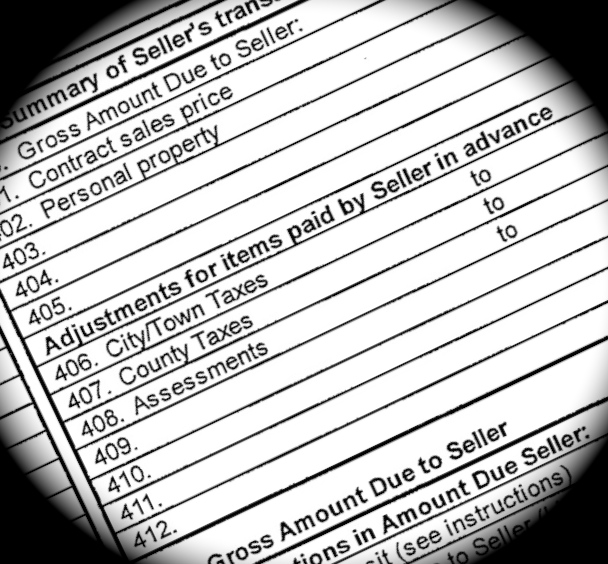
The sky is falling! To hear lenders and closing attorneys tell it, the world as we know it comes to an end on October 3rd. That’s the day new regulations come into effect that govern the mortgage lending and closing process. Whether or not there’s mass bedlam, there are certainly changes that buyers and sellers of property should be aware of and prepared for, so this article will summarize them.

To understand how things are changing, it is important to know how the world works now. Today, sometimes the loan and closing statement will change the day of closing or even while parties are sitting at the closing table. Starting in October, that cannot and will not be possible anymore, at least as to every mortgage application received October 3, 2015 or later. The new rules require that a new document, the Loan Estimate, must be provided to the borrower within three days after loan application, and another new document, the Closing Disclosure, must be provided to the borrower at least three business days prior to closing. These apply to any mortgage loans with no exceptions. If there are changes to the deal, a new disclosure must be provided and the three-day waiting period starts all over. While previously the settlement statement was provided by the closing attorney and often at the last minute, with the new regulations the lenders themselves will likely be providing the statement directly to the borrower and they must confirm and document receipt by the consumer.

You can see how this can potentially cause big problems. “Stacked closings” are common now, in which the seller of one property uses those proceeds to purchase a new property in the next hour from a seller who may the following hour be buying a new property of their own. These back-to-back closings dependent upon one another for consummation are already tenuous at times. Imagine what the new three-day waiting requirement may do! So in practical effect and application, we Realtors must advise our clients of the following:

  • Delays are much more likely, particularly in the early days of implementation of the new regulations.
  • A seller will want to negotiate possession some number of days AFTER closing. While this has always been the case for a seller still living in the property they are selling, now it becomes even more crucial.
  • A buyer will want to commit to a lender as soon as possible in order to attempt to limit any delays. A buyer will want to be sure they choose a lender fully conversant with the new regulations and a lender who has a system in place to comply.
  • While some lenders can get a loan through underwriting and closed quickly, every loan is going to take longer with these new requirements, particularly at first. A cushion of 45 days between contract and close is advisable.
  • From a Realtor’s standpoint, any and all provisions of the contract should be tied up as early as possible. In particular, if there are monetary concessions during the due diligence period, those should be provided to the lender as soon and as early as possible. Even changes in the Realtor’s commission are part of the disclosure process and should be wrapped up as early in the process as possible.
  • While lenders are the primary front line, closing attorneys must also be in line with the new regulations. It is advisable to look for a closing attorney who does residential real estate closings regularly, has systems in place, and preferably is ALTA (American Land Title Association) best practices certified.

The new disclosures are designed to help consumers better understand the terms and costs of their mortgage loan; however, in one aspect the new disclosures are more confusing. The new rule prohibits lenders from disclosing a reduction that is commonly offered by the title insurance companies when a lender’s title policy and the borrower’s title policy are issued at the same time. Instead, there’s one lump sum disclosed; at closing the cost will actually be *less*. While that might result in a pleasant surprise for some at closing, those borrowers who are watching closely will likely be more confused about what, exactly, the title insurance is actually going to cost them at closing.

The home sale and purchase process can be confusing enough. If you are planning to make a move this year, be sure you plan for these new regulations and have trusted advisors guiding you through the process.

Mary Anne Walser is a licensed attorney and full-time REALTOR, serving buyers and sellers in all areas of Metro Atlanta. Her knowledge of residential real estate and her legal expertise allow her to offer great value to her clients. Mary Anne serves on the Committee that drafts and reviews the contracts utilized by all REALTORS in the State of Georgia. In addition, she is a member of the Atlanta Board of Realtors, the Georgia Association of Realtors, the State Bar of Georgia and the Georgia Association of Women Lawyers. Contact Mary Anne at 404-277-3527, or via email: maryannesellshomes@gmail.com.

Share this:

  • Click to share on Facebook (Opens in new window) Facebook
  • Click to share on LinkedIn (Opens in new window) LinkedIn
  • Click to share on X (Opens in new window) X
  • Click to email a link to a friend (Opens in new window) Email
  • Click to print (Opens in new window) Print
  • Click to share on WhatsApp (Opens in new window) WhatsApp
  • More
  • Click to share on Reddit (Opens in new window) Reddit
Like Loading...

MULTIPLE OFFER SITUATIONS

26 Monday Aug 2013

Posted by Mary Anne Walser, REALTOR in real estate

≈ Leave a comment

Tags

atlanta, bids, buy, contract, costs, house, inventory, lender, loan, market, multiple, offer, preapproval, purchase, real estate, sell

Sellers Market

Our Atlanta real estate market is currently a strong “seller’s market”. We define a seller’s (vs. buyer’s) market in terms of available inventory.  If there is six months or less of housing inventory on the market, it’s a seller’s market – more than six months of inventory is a buyer’s market.

When we say “six months” worth of inventory, that means that if nothing new were to come on the market (hypothetically, of course), it would take six months to sell everything that it currently listed.  This is calculated this way

  • We compute the total number of active listings on the market last month in the area under consideration;
  •  Then compute the total number of sold homes for the that month;
  •  Then divide the number of current active listings by the number of total sales for the month, which gives you the months of inventory which remain.

Using this formula, the Atlanta Metro area has less than five months of active listings (in some areas, less than three).  So listings are often going under contract within the first day or two they are available, with multiple offers.  A seller who gets multiple offers may pick the best one and respond to it OR may decide to contact all bidders and request their “highest and best” bid and go with the bid the seller finds most advantageous to them.

If you are a buyer trying to “win” in a multiple offer situation, it goes without saying that you should place your HIGHEST offer – the most amount of money that you are willing to pay for the property.  The seller will usually go with the highest bid, but not always.  There are other factors important to the seller: how likely a buyer is to get to the closing table, for instance (so a buyer with cash is “king” – because loans can fall through, of course).  This is why the seller asks not only for your “highest” offer, but for your “highest and BEST” offer.  Let’s look as some of the factors that will help your offer be the “best” offer.

First, if you can avoid asking the seller to pay closing costs, I would recommend that.  A seller will perceive a buyer who is asking for closing costs as not as strong a buyer.  A strong buyer has enough cash on hand to pay their own closing costs and can avoid rolling those closing costs into the loan by asking the seller to pay for them.  (What the seller cares about is the seller’s “net” – contract price minus closing costs paid.  By asking the seller to pay closing costs you are offering them “less” than the contract price and perhaps indicating that you are not as strong  a buyer).

Another seller consideration is how difficult the seller perceives that the buyer is going to be during the contract to close process.  A buyer who asks for too much in the opening bid may be perceived as a scared buyer who is more likely to terminate the contract during the due diligence period.  Or one who is likely to ask for excessive seller concessions during due diligence.

Here are some other pointers if you are the buyer placing a bid against other offers:

  • Make your offer a CLEAN AS POSSIBLE; meaning avoid stipulations.  Keep those stipulations you do include as simple as possible.
  • For instance, we will sometimes insert a stipulation asking for a professional cleaning of the property from the seller prior to transfer of possession.  If there are multiple bids, LEAVE THAT OUT.  That stipulation is sometimes taken the wrong way by sellers who think that they are indicating that the property is less than clean, and that may be the thing that prevents you from getting the property.  You can pay for your own move in cleaning if the seller doesn’t (and many, if not most, sellers will have the property professionally cleaned without you asking for it)– but don’t risk losing the property by asking for this when there are other offers.
  • The same thing goes for other items you might otherwise ask for: a survey, condo documents, etc.  You can pay  for a survey yourself and still *ask* for the condo documents (or have your agent get them) during the due diligence period. Asking for them in the initial offer may, all other things being equal, cause a seller to choose another offer that is simpler for the seller.
  • You may be competing against other offers that DO NOT HAVE a financing or appraisal contingency.  If you need financing, you must have those contingencies (unless you have enough cash to cover if the property ends up not appraising for full contract price and are willing to take that chance). But keep this in mind – know that some buyers will pay cash without a loan OR appraisal contingency for a hot property.  So you may be beat out not on price but by a buyer in that position.
  • So if you must have a loan and appraisal contingency, make them as clean and enticing as possible.  Here are some guidelines: indicate in the contingency how much money you are putting down – more is better to the seller, of course.  If you are putting fifty percent down,  you are a stronger buyer than someone putting twenty percent down, for instance.  Keep the loan and financing contingencies as tight as possible – 21 to 25 days is the norm, but go shorter if you can in order to present your offer in the best light.
  • HAVE A PREAPPROVAL LETTER (or proof of funds if you are paying cash).  Most sellers won’t even consider an offer with a prequal or proof of funds.  It is best if that preapproval letter is from a recognized lender who regularly does mortgage loans so that the seller is reasonably certain that the lender will not botch the deal.
  • You may also be competing against an “AS IS” offer; that is, one in which the buyer says that they will purchase the property without asking for any repairs.  (In an “as is” contract, the buyer still has a right to inspections, but has agreed not to ask the seller for any repairs). Therefore, if you do want a due diligence period, keep that period as short a possible (typical is 7 to 10 days – in multiple offer situations, I definitely recommend not going over 10 days).

Finally, it sometimes helps to use a “personal touch”.  Tell the seller something about yourself.  We call this a “buyer’s letter” and I will often write them for clients in situations where I think it would be helpful.  Tell them what you like about the home and give them information so that they know you’ll be a good neighbor.  Not all, but many sellers care very much about what type of person is purchasing their home and what type of neighbor that person will be for the friends that they are leaving behind.

Put your best foot forward when there are multiple offers – remember that you are competing not only on price; and good luck!  If your bid is NOT the winning bid, consider asking the seller to hold on to it as a “back up offer” in case the winning offer falls through.

Share this:

  • Click to share on Facebook (Opens in new window) Facebook
  • Click to share on LinkedIn (Opens in new window) LinkedIn
  • Click to share on X (Opens in new window) X
  • Click to email a link to a friend (Opens in new window) Email
  • Click to print (Opens in new window) Print
  • Click to share on WhatsApp (Opens in new window) WhatsApp
  • More
  • Click to share on Reddit (Opens in new window) Reddit
Like Loading...

WHAT HAPPENS AT CLOSING?

29 Tuesday Jan 2013

Posted by Mary Anne Walser, REALTOR in real estate

≈ Leave a comment

Tags

buying, closing attorney, CLOSING STATEMENT, Good Faith Estimate, house, HUD Settlement Statement, inspection, lawyer, lender, Liens, loan closing, offer, property, real estate, realtor, selling, TITLE SEARCH

Closing Table

You have found your dream house. Made an offer, came to terms, got through inspection.  Finalized the loan and have prepared to move. Once all that is done, there’s nothing left but the final – and crucial – hour. The closing.

So what happens at this mysterious event we call “THE CLOSING”?  Many buyers are intimidated by the closing, particularly since it takes place in a lawyer’s office and involves signing page after page of legal documents. Enough to give anyone a headache.

But really, truly, you as a buyer should take a deep breath, relax, and ENJOY the closing.  Enjoy the free soft drinks and chocolate provided by the closing attorney.  Quiz the sellers about the neighbors and nearby stores and what they will miss most about the house. Laugh with your Realtor about the homes you saw that were awful (“remember that bright orange kitchen in that one house?”). Shake hands with your lender.

You can RELAX, because at this point if your Realtor and lender have done their jobs, the hard work is all done.

The closing attorney works for the lender. As a practical matter, the lender’s interests are aligned with yours, as the buyer. The closing attorney, weeks prior to the closing, ordered a TITLE SEARCH. A title search is a canvassing of the relevant county records to make sure that the seller owns the property and that there are no “liens” or claims against the property. If there are any liens, the closing attorney’s job is to clear those liens so that you are getting title to property clear and free of anyone else’s claims against it.

You don’t have to worry about any of this – because as the representative of the lender, the closing attorney has already cleared title. Pursuant to the Georgia contract, the Seller must convey clear title.  So if you’re sitting at the closing attorney’s table, title is clear. (If it’s not, the closing attorney will let all parties know and the deal will not close as scheduled until title IS clear; but typically if there is a problem you will know well in advance of the scheduled closing).

The closing attorney will first present all parties with a CLOSING STATEMENT – also known as a HUD Settlement Statement, or simply “HUD STATEMENT”.  HUD stands for Housing and Urban Development – the federal agency which mandates the form.  This and the note are the two most important documents in the closing – most if not all of the other forms are simply form documents that everyone must sign and which are the same in every closing. The HUD statement and the note are unique to you.

This is where your Realtor comes in – the Realtor represents YOU in the closing.  It’s our job to make sure the closing statement accurately reflects the financial deal between the parties.  It is a smart thing to provide your Realtor, also, with the Good Faith Estimate previously provided to you by your Lender.  The closing statement should reflect the charges in the GFE very closely (the margin of variance allowed is prescribed by law, and the closing attorney will go through with you any variance between the estimate and the actual statement).

We will check the other key document – the Note – to be sure it accurately reflects the amount of the loan, the term, the interest rate, and other terms of the loan.

There are many other pages of documents for you to sign – the Security Deed, the Truth in Lending Statement, a copy of your loan application. Most, again, are form documents – but the Truth in Lending Statement (or TIL) is worth some extra explanation here.

The TIL shows what you will pay in total over the life of the loan – adding principal and interest over the thirty years of a loan (or fifteen, if you have a fifteen year loan). It also shows a percentage – but this is very confusing.  It is NOT your interest rate. Throws buyers off all the time. It actually is your interest rate PLUS your closing costs, even if all or part of the closing costs are being paid by the Seller. Meant to be a helpful document, it’s really not. The most important thing for you to know about the TIL is that it’s not important – it’s simply for your information but must be signed. The Note and the HUD Statement govern – and they show your costs and your interest rate in a more easily understood manner.

Once you’ve signed all those documents, handed over the money you’re to bring to closing (which must be either wired or brought as certified funds), checks are cut, keys are handed over, and you own a new home!  It may seem a little anti-climatic at the time. But there’s always a big sense of relief and joy. Congratulations on your new home!

Share this:

  • Click to share on Facebook (Opens in new window) Facebook
  • Click to share on LinkedIn (Opens in new window) LinkedIn
  • Click to share on X (Opens in new window) X
  • Click to email a link to a friend (Opens in new window) Email
  • Click to print (Opens in new window) Print
  • Click to share on WhatsApp (Opens in new window) WhatsApp
  • More
  • Click to share on Reddit (Opens in new window) Reddit
Like Loading...

DO YOU WANT CONTRACTORS OR CASH? – A look at money in lieu of repairs

03 Friday Aug 2012

Posted by Mary Anne Walser, REALTOR in real estate

≈ Leave a comment

Tags

atlanta, buyer. Inspection, buying, CASH, closing costs, CONTRACTORS, due diligence, home, house, lender, money, property, real estate, repairs, seller, selling

Image

During the due diligence period, the buyer does an inspection and asks for repairs.  The seller may prefer to give money, and not want to actually do the repairs because (1) they fear that the buyer will not be happy with the repairs and will ask the seller to redo them; (2) they may not have sufficient time to schedule repairs, pack, and move; (3) they simply do not want to have to take the time and effort to have them done.

The buyer may also prefer that the seller give money in lieu of repairs because (1) the buyer can oversee the repairs and be sure that they are to the buyer’s liking; (2) the buyer may want to do other modifications related to the trade at the same time and the money can simply go towards the larger bill; (3) the buyer may find it worthwhile to postpone the repair and use the money now.

In the instance where both sides agree to money in lieu of repairs, the buyer has several choices: he/she can reduce the purchase price by the agreed-upon amount, or have that amount added to seller-paid closing costs. Previously, we could have checks written at closing to third party vendors for the repairs to be performed later, but with the tightened mortgage restrictions that is generally not possible.  Which is preferable – reducing the sales price or increasing the closing costs?  Here are the pros and cons:

  • Either way, the buyer brings less cash to closing.
  • The lender typically will limit the amount of closing costs the seller can pay on behalf of the buyer.  For most loans, it’s three percent of the purchase price.  So just be sure that if you’re increasing the closing costs paid by the seller, you’re not running afoul of this limit.
  • If you decrease the purchase price, the purchase price is reflected in the tax records and future buyers will see that you paid less for the place. The plus side is that the tax commissioner also looks at the purchase price in determining taxable value, so a lower purchase price may result in a lower      property tax burden.

Either way, be sure your lender knows of the change in the contract.  Any changes – particularly those that change the purchase price of the property – must go through underwriting and you want to be sure there is plenty of time before closing to take that step.

Share this:

  • Click to share on Facebook (Opens in new window) Facebook
  • Click to share on LinkedIn (Opens in new window) LinkedIn
  • Click to share on X (Opens in new window) X
  • Click to email a link to a friend (Opens in new window) Email
  • Click to print (Opens in new window) Print
  • Click to share on WhatsApp (Opens in new window) WhatsApp
  • More
  • Click to share on Reddit (Opens in new window) Reddit
Like Loading...

Buying a Short Sale can be a Tall Order

09 Friday Mar 2012

Posted by Mary Anne Walser, REALTOR in real estate

≈ 1 Comment

Tags

atlanta, buyer, closing, Georgia, home buying, home selling, lender, lienholders, loan, market, owe, property, real estate, seller, short sale

A short sale is usually anything but short.  Sort of like the attorney’s “legal brief” which is never brief, a short sale is very rarely “short”.  The term refers to the situation when the seller OWES more on the property than the property is worth, and is attempting to persuade the lender to take less than is owed on the property in full satisfaction of the loan.  You have probably heard the term “underwater” – a short sale seller is underwater on the house (has borrowed more against it than is supported by its current market value) and is trying to sell the home without having to cough up the difference at closing. 

A short sale can take MONTHS and MONTHS (although I HAVE had one approved in two weeks – that is very unusual).  The lender generally doesn’t WANT to take less than is owed, as you might imagine.  Therefore it’s somewhat of a fight, and if/when there are multiple lenders and lienholders (as there often are) it is often next to impossible to get them all to agree.  We agents sometimes say that it’s the THIRD short sale buyer who actually gets the house, meaning that most buyers who make an offer on a short sale get tired of waiting for the approval and just go on and buy something else.  Of course, the short sale may or may not EVER happen.  The seller may just stay and pay – or it may end up as a foreclosure.

Even when the short sale lender or lenders approve the short sale, they will sometimes reserve the right to disapprove the short sale at any time before closing – which poses another problem; it could fall through at the last minute.  In fact, you can be sitting at the closing table when the word comes that the lender has decided to withdraw approval and foreclose instead.

Other potential snafus are that the seller usually wants a release from any and all liability with respect to the loan, while the short sale lender(s) will often require that the seller sign a personal note back to the lender for the remainder owed.  Another problem I have seen is when the seller does not realize that they may be TAXED on the forgiveness of debt (why the seller’s agent did not bring up this issue to the seller prior to getting a contract is beyond me, but it happens).  The IRS considers forgiveness of debt taxable income, and the seller will be responsible for paying that tax.  A side note – if you are the seller, please consult your accountant on this one – because if it is your personal residence you are selling, the forgiveness may be excludable, much as GAIN from the sale is excludable if you have lived in the house as your main residence for two of the past five years.

In other words, short sales are a PAIN, but you CAN get a great deal.  It’s best to look for PREAPPROVED short sales where only one lender is involved.  Pre-approved means the lender has already agreed to accept a short pay-off, and these deals are much more likely to go through.  In any event, I usually counsel buyers to go ahead and make an offer on a short sale if that is the property that they really like, but the to KEEP LOOKING.  You can always terminate your short sale offer if you find something better in the interim. 

We agents are all ready for the day when regular sales again outnumber foreclosures and short sales, but I am also glad to see those sales moving through the system.  The quicker we turn over the troubled properties to buyers who can handle the payments, the faster the housing market will recover.

Share this:

  • Click to share on Facebook (Opens in new window) Facebook
  • Click to share on LinkedIn (Opens in new window) LinkedIn
  • Click to share on X (Opens in new window) X
  • Click to email a link to a friend (Opens in new window) Email
  • Click to print (Opens in new window) Print
  • Click to share on WhatsApp (Opens in new window) WhatsApp
  • More
  • Click to share on Reddit (Opens in new window) Reddit
Like Loading...

  • Mary Anne Walser, REALTOR's avatar

Archives

  • June 2022 (1)
  • February 2022 (1)
  • April 2021 (1)
  • February 2021 (1)
  • August 2020 (1)
  • June 2020 (1)
  • February 2020 (1)
  • October 2019 (1)
  • January 2019 (1)
  • December 2018 (1)
  • November 2018 (1)
  • September 2018 (1)
  • August 2018 (1)
  • June 2018 (2)
  • April 2018 (1)
  • March 2018 (1)
  • February 2018 (1)
  • January 2018 (1)
  • November 2017 (1)
  • October 2017 (1)
  • September 2017 (1)
  • August 2017 (1)
  • July 2017 (1)
  • June 2017 (2)
  • February 2017 (1)
  • January 2017 (2)
  • November 2016 (2)
  • October 2016 (1)
  • September 2016 (2)
  • August 2016 (1)
  • July 2016 (1)
  • June 2016 (3)
  • May 2016 (3)
  • April 2016 (2)
  • March 2016 (1)
  • January 2016 (1)
  • December 2015 (1)
  • November 2015 (1)
  • October 2015 (2)
  • August 2015 (1)
  • June 2015 (1)
  • March 2015 (1)
  • February 2015 (2)
  • December 2014 (1)
  • August 2014 (1)
  • June 2014 (2)
  • January 2014 (3)
  • December 2013 (2)
  • September 2013 (1)
  • August 2013 (1)
  • July 2013 (2)
  • June 2013 (1)
  • April 2013 (1)
  • March 2013 (3)
  • February 2013 (3)
  • January 2013 (2)
  • November 2012 (2)
  • October 2012 (1)
  • August 2012 (2)
  • July 2012 (1)
  • May 2012 (1)
  • April 2012 (2)
  • March 2012 (3)
  • February 2012 (3)
  • January 2012 (2)
  • December 2011 (2)
  • November 2011 (3)
  • October 2011 (3)
  • September 2011 (3)
  • August 2011 (6)

Recent Posts

  • Where Sellers Go
  • 2022 A (real estate) Space Odyssey & Oddities
  • Renovate or Relocate!?
  • OWNING A PIECE OF ATLANTA HISTORY
  • Your Atlanta Pandemic Real Estate Plan

Enter your email address to subscribe to this blog and receive notifications of new posts by email.

Join 4,045 other subscribers
  • RSS - Posts
Follow Atlanta Real Estate Wisdom on WordPress.com

Mary Anne Walser, Realtor & Licensed Attorney

Keller Williams Realty
3650 Habersham Rd.
Atlanta, GA 30305
404-277-3527

Blog at WordPress.com.

  • Subscribe Subscribed
    • Atlanta Real Estate Wisdom
    • Join 82 other subscribers
    • Already have a WordPress.com account? Log in now.
    • Atlanta Real Estate Wisdom
    • Subscribe Subscribed
    • Sign up
    • Log in
    • Report this content
    • View site in Reader
    • Manage subscriptions
    • Collapse this bar
 

Loading Comments...
 

    %d