
• About Real Estate Wisdom
  • Blog of Wisdom
  • Testimonials
  • Contact

Atlanta Real Estate Wisdom

~ the source for Atlanta real estate expertise

Atlanta Real Estate Wisdom

Tag Archives: closing

Chicken Little Goes to Closing

06 Thursday Aug 2015

Posted by Mary Anne Walser, REALTOR in real estate

≈ Leave a comment

Tags

atlanta, attorney, closing, disclosure, home buying, home selling, lender, lenders, mortgage, mortgage loan, real estate, realtor
HUD

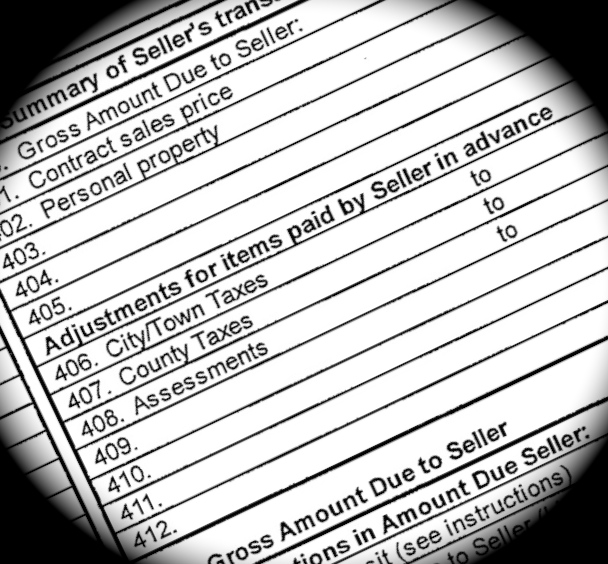
The sky is falling! To hear lenders and closing attorneys tell it, the world as we know it comes to an end on October 3rd. That’s the day new regulations come into effect that govern the mortgage lending and closing process. Whether or not there’s mass bedlam, there are certainly changes that buyers and sellers of property should be aware of and prepared for, so this article will summarize them.

To understand how things are changing, it is important to know how the world works now. Today, sometimes the loan and closing statement will change the day of closing or even while parties are sitting at the closing table. Starting in October, that cannot and will not be possible anymore, at least as to every mortgage application received October 3, 2015 or later. The new rules require that a new document, the Loan Estimate, must be provided to the borrower within three days after loan application, and another new document, the Closing Disclosure, must be provided to the borrower at least three business days prior to closing. These apply to any mortgage loans with no exceptions. If there are changes to the deal, a new disclosure must be provided and the three-day waiting period starts all over. While previously the settlement statement was provided by the closing attorney and often at the last minute, with the new regulations the lenders themselves will likely be providing the statement directly to the borrower and they must confirm and document receipt by the consumer.

You can see how this can potentially cause big problems. “Stacked closings” are common now, in which the seller of one property uses those proceeds to purchase a new property in the next hour from a seller who may the following hour be buying a new property of their own. These back-to-back closings dependent upon one another for consummation are already tenuous at times. Imagine what the new three-day waiting requirement may do! So in practical effect and application, we Realtors must advise our clients of the following:

  • Delays are much more likely, particularly in the early days of implementation of the new regulations.
  • A seller will want to negotiate possession some number of days AFTER closing. While this has always been the case for a seller still living in the property they are selling, now it becomes even more crucial.
  • A buyer will want to commit to a lender as soon as possible in order to attempt to limit any delays. A buyer will want to be sure they choose a lender fully conversant with the new regulations and a lender who has a system in place to comply.
  • While some lenders can get a loan through underwriting and closed quickly, every loan is going to take longer with these new requirements, particularly at first. A cushion of 45 days between contract and close is advisable.
  • From a Realtor’s standpoint, any and all provisions of the contract should be tied up as early as possible. In particular, if there are monetary concessions during the due diligence period, those should be provided to the lender as soon and as early as possible. Even changes in the Realtor’s commission are part of the disclosure process and should be wrapped up as early in the process as possible.
  • While lenders are the primary front line, closing attorneys must also be in line with the new regulations. It is advisable to look for a closing attorney who does residential real estate closings regularly, has systems in place, and preferably is ALTA (American Land Title Association) best practices certified.

The new disclosures are designed to help consumers better understand the terms and costs of their mortgage loan; however, in one aspect the new disclosures are more confusing. The new rule prohibits lenders from disclosing a reduction that is commonly offered by the title insurance companies when a lender’s title policy and the borrower’s title policy are issued at the same time. Instead, there’s one lump sum disclosed; at closing the cost will actually be *less*. While that might result in a pleasant surprise for some at closing, those borrowers who are watching closely will likely be more confused about what, exactly, the title insurance is actually going to cost them at closing.

The home sale and purchase process can be confusing enough. If you are planning to make a move this year, be sure you plan for these new regulations and have trusted advisors guiding you through the process.

Mary Anne Walser is a licensed attorney and full-time REALTOR, serving buyers and sellers in all areas of Metro Atlanta. Her knowledge of residential real estate and her legal expertise allow her to offer great value to her clients. Mary Anne serves on the Committee that drafts and reviews the contracts utilized by all REALTORS in the State of Georgia. In addition, she is a member of the Atlanta Board of Realtors, the Georgia Association of Realtors, the State Bar of Georgia and the Georgia Association of Women Lawyers. Contact Mary Anne at 404-277-3527, or via email: maryannesellshomes@gmail.com.

Share this:

  • Click to share on Facebook (Opens in new window) Facebook
  • Click to share on LinkedIn (Opens in new window) LinkedIn
  • Click to share on X (Opens in new window) X
  • Click to email a link to a friend (Opens in new window) Email
  • Click to print (Opens in new window) Print
  • Click to share on WhatsApp (Opens in new window) WhatsApp
  • More
  • Click to share on Reddit (Opens in new window) Reddit
Like Loading...

Settling Into Your New Home

23 Monday Mar 2015

Posted by Mary Anne Walser, REALTOR in real estate

≈ Leave a comment

Tags

closing, home buyer, home buying, homebuying, homeowner, inspection, Moving, real estate

Attractive Homes Clipart House Clipart

The papers are signed and you are moving in – congratulations!  And welcome to your new home.  Here are some things you should know about as a new homeowner.  First, you will get lots of coupons and offers in the mail.  Marketing companies watch the county records for new homeowners and your “change of address” form with the post office is also a trigger telling companies “Hey!  I’ve moved!  I am going to buy stuff!”  Chances are you held off purchasing new furniture, etc. until after closing.  But keep in mind that even if you want to buy things ahead of closing, it doesn’t hurt to ask the merchant if they have a discount for new homebuyers.  Many do, particularly furniture companies, and sometimes they’ll give you the discount even before you close.

Keep in mind also that you will notice things about your home that you did not notice before closing.  Perhaps a ding on the countertop, scratches on the floor, chipped paint, that sort of thing.  This is regular and normal for the most part.  Sometimes it isn’t.  For instance, recently I helped a purchaser buy an awesome condo.  After closing, when she moved in her toilet was leaking.  We didn’t notice it before; it didn’t come up in the inspection and we didn’t notice it in the walkthrough.  So guess what her housewarming gift from me was?  You guessed it.  I do have toilet visiting privileges now, and since it’s near Piedmont Park that might come in handy.  But here’s the point – there may be things wrong with the home you didn’t know about or your inspector didn’t catch.  Maybe the problem developed after the inspection and wasn’t noticeable during your walkthrough.  Know that this is normal.   Things like this are rarely worth suing over unless you think there’s been fraud.  The best approach is to be as diligent as you can and budget for some unforeseen circumstances – and above all, remember that “perfection” doesn’t exist (although some homes come close….)

Perhaps at the closing table you exchanged contact information with the home seller.  If both parties are open to it, then the information is exchanged; if not, the Realtors can help facilitate communication after closing if necessary.  Perhaps you as a buyer finds something the seller left behind, or have received mail that needs to be forwarded, or have questions about those things you did not notice prior to closing.  But there’s another reason you might wish to contact the seller.  At the closing table the attorney likely told you that if the property tax bill changed after closing such that the proration on the statement was inaccurate, then the parties should arrange a re-accounting amongst themselves if appropriate.  Personally I’ve never seen that happen, but it could; know that if the tax bill you receive is significantly higher than a previous proration on the closing statement, that it is appropriate to contact the seller for a re-accounting.  Know as a practical matter the seller is not likely to be excited about paying out more property tax money on a home that they no longer own (and of course rarely would a buyer contact a seller to REFUND prorated funds if the tax bill gets smaller, but that happens too).

Now here is a tip that we often forget to tell buyers – but it’s important.  You’ll get solicitations from companies that offer to send you a copy of your deed for a price – (prices I’ve seen range everywhere from $25 to $75).  These solicitations look “official” and give the impression that the only way you can get a copy of your deed is to pay that company to send you a copy – NOT SO.  The county will send you a stamped-filed deed after your closing for FREE and your Realtor can always pull your deed from the on-line records and send it to you at no cost.  There is no need to pay a third party company to send you a copy of your deed – hang on, it is coming your way for free.

But that is not the worst “official looking” correspondence you will get.  You may also get letters asking you to pay to file a homestead exemption form; again, you don’t have to pay.  The forms are free on the county websites and you can file for free.  (The homestead exemption gives you a break in property taxes if you live in and occupy your home).  You may also get correspondence from companies that want to split your mortgage payments into payments every two weeks rather than monthly.  If you want to prepay your mortgage, you can do that without the help of a third party who wants to charge you to help.  If you get a notification that your loan has been sold and you should send your payments to a new lender CALL your current lender before believing a document sent by mail.  The name of your mortgage company is easily available in public records, so a scammer can write you an “official looking” notice purporting to be from your lender that is in no way official.

So, keeping in mind these tips, reminders, and warnings, enjoy your new home!

Mary Anne Walser is a licensed attorney and full-time REALTOR, serving buyers and sellers in all areas of Metro Atlanta. Her knowledge of residential real estate and her legal expertise allow her to offer great value to her clients. Mary Anne serves on the Committee that drafts and reviews the contracts utilized by all REALTORS in the State of Georgia. In addition, she is a member of the Atlanta Board of Realtors, the Georgia Association of Realtors, the State Bar of Georgia and the Georgia Association of Women Lawyers. Contact Mary Anne at 404-277-3527, or via email: maryannesellshomes@gmail.com.

Share this:

  • Click to share on Facebook (Opens in new window) Facebook
  • Click to share on LinkedIn (Opens in new window) LinkedIn
  • Click to share on X (Opens in new window) X
  • Click to email a link to a friend (Opens in new window) Email
  • Click to print (Opens in new window) Print
  • Click to share on WhatsApp (Opens in new window) WhatsApp
  • More
  • Click to share on Reddit (Opens in new window) Reddit
Like Loading...

WHAT TO LOOK FOR IN A CLOSING ATTORNEY

13 Monday Jan 2014

Posted by Mary Anne Walser, REALTOR in real estate

≈ Leave a comment

Tags

atlanta homes, closing, closing attorneys, home buying, home sales, real estate

We have all heard the closing horror stories.  The closing that took eight hours.  Or even worse, the parties that waited eight hours only to be told to come back the following day or even week.  The closings that never happened.

If the agents, parties, lenders, and attorneys have done their jobs, there should be no such horror tales.  By the time closing approaches, all problems should be resolved.  While all parties could have a part in a closing nightmare, typically any delays or problems are associated with the buyer’s loan; the closing is when the lender funds the transaction.  Problems arise when the buyer has failed to supply all required documents, if the lender’s underwriting department isn’t on the ball, or if there are problems with title to the property.

Choosing the right lender is one element of this puzzle.  But the other important consideration is the CLOSING ATTORNEY.  A good closing attorney will work out any problems they can ahead of time, and let the parties know promptly if the lender is indicating that there are any problems with funding.  So how do we choose the closing attorney?

In Georgia, real estate purchase transactions must be conducted by a licensed attorney.  In some states, a title company can hold the closing without an attorney present, but here in Georgia you must use a licensed attorney, and that  attorney represents the buyer’s LENDER.  Therefore, typically the Buyer chooses the closing attorney, subject to approval by the Buyer’s lender.  However, a Seller, particularly one who is paying closing costs on behalf of the Buyer, can often negotiate to name the closing attorney.   Here’s what to look for if you are the Buyer or the Seller and need a closing attorney:

  • Choose an attorney who does closings often, regularly, and in the normal course of business.  I look for attorneys who have a full staff devoted only to closing real estate loans.  This doesn’t mean that the firm can’t or doesn’t also handle other legal work – just that they have a full and complete department specializing in real estate closings.  You don’t want the attorney’s office that only does closings once in a blue moon – closings are too specialized and too important to the parties.
  • I recommend that you also choose a closing attorney’s office that has been in business for a long time and which will BE In business for the foreseeable future.  You may not sell your home for seven years or longer.  What if at the time you go to sell the home you purchased you can’t find your title insurance policy or some other important document?  Or you need a legal affidavit relating to the closing?   If your closing attorney is around, they are invaluable in that instance.

Image

Realtor Panel convened by Morris Hardwick Schneider – our pre-meeting last week

Recently I was asked to serve on a panel of top producing agents.  The forum was a firm retreat for the largest real estate closing firm in the Southeast, Morris Hardwick Schneider.  I was honored to be asked and impressed that real estate closing attorneys cared enough to find out how they could be BETTER closing attorneys, from a Realtor’s point of view.  Look for a firm, similarly, who is focused on and cares about customer service.  It’ll pay off in piece of mind.  And will keep those horror stories at bay.

Mary Anne Walser is a licensed attorney and full time REALTOR, serving buyers and sellers in all areas of Metro Atlanta. Both her knowledge of residential real estate and her professional legal expertise offer great value to her clients. Mary Anne serves on the Committee that drafts and reviews the contracts utilized by all REALTORS in the State of Georgia. In addition, she is a member of the Atlanta Board of Realtors, the Georgia Association of Realtors, the State Bar of Georgia and the Georgia Association of Women Lawyers. Contact Mary Anne at 404-277-3527, or via email: maryannesellshomes@gmail.com.

Share this:

  • Click to share on Facebook (Opens in new window) Facebook
  • Click to share on LinkedIn (Opens in new window) LinkedIn
  • Click to share on X (Opens in new window) X
  • Click to email a link to a friend (Opens in new window) Email
  • Click to print (Opens in new window) Print
  • Click to share on WhatsApp (Opens in new window) WhatsApp
  • More
  • Click to share on Reddit (Opens in new window) Reddit
Like Loading...

A HOUSE DIVIDED: The Family Home in a Divorce

27 Friday Sep 2013

Posted by Mary Anne Walser, REALTOR in real estate

≈ Leave a comment

Tags

atlanta, attorney, buy, closing, divorce, home, house, loan, mortgage, real estate, realtor, sell

“When we divorced we split the house 50/50 – she got the inside and I got the outside.”

 “Have you seen the new “Divorcing Barbie” doll? She comes with Ken’s house.”

House Divided

             Joking aside, the family home is sometimes the greatest asset to divide in a divorce – so let’s look at how to handle this crucial asset.

It is advisable to call a Realtor early on, when you’re analyzing what assets you have and don’t have.  I often get called in to look at the home and give an assessment of its value in today’s market.  It makes sense to call a Realtor at this point – we typically are more familiar with the neighborhood and have been in the homes that are for sale and have sold, and are accustomed to pricing properties for sale.

There are online tools you can use as well – zillow.com, for instance, which gives you a “zestimate” of what your home is worth, or trulia.com.  However, these services have obviously not been inside your home or the other homes – so they are very general and cannot necessarily be relied upon.  Tax records are also notoriously unreliable.

A crucial consideration at this point may be whether or not the couple is “underwater”; that is, whether you owe more on the property than the property is worth.   If so, to sell the home you would have to bring money to the table.  In other words, in some instances it may not be possible to sell the home.

Also consider early on whether or not you want to fight to keep the home.  Can you afford the monthly carrying costs?  It might not be worth fighting for if it’s something you cannot keep up.

If one party does end up staying in and keeping the home, however, that party may be buying the other party out.  In that instance, professional appraisals are probably in order – each side getting their own appraisal and then perhaps a third appraisal if the two vary widely.  Know that appraisals are an ART as well as a science – while appraisers are bound by the Uniform Appraisal Guidelines and professional dictates, there is some subjectivity in the process.  When you hire an appraiser, you might wish to share with them the comparable sales that you think are most applicable and why they should be used.  Most appraisers are happy to consider the information, although of course they are not bound to use it.

But say the decision is that the home needs to be SOLD.  It’s great if you can both agree on a Realtor.  That actually happens much more often than you might think.  Maybe you both liked the Realtor who sold you the home.  Or know a Realtor jointly who you respect.  Another tactic is to interview three Realtors and see if there’s a clear front runner who you can agree upon.  If not, one way this is sometimes handled is that one party will choose the Realtor for a specified period of time and the other party will choose for the next period – be it 3 months or 6 months.

Several considerations arise here.  Keep in mind that there are various expenses involved in getting the home ready for sale and keeping it maintained while it is on the market.  How those expenses are handled should be decided upon in advance.  You might also want to decide in advance how much the list price will be decreased and when – and what offers should be acceptable (i.e., you can agree that any offer within five percent of list price must be accepted, that sort of thing).

Then there are some very practical showing considerations.  An example will illustrate this point.  We had one client where the wife left with all the nice furniture.  We were left showing a home with very little furniture and a “divorce feel.”  Try to agree to keep enough nice things in the home to make it show well.  Like it or not, buyers are swayed by these things.  Most buyers choose emotionally and THEN justify the purchase logically.  If they walk in and the home feels forlorn and empty, they will not feel great about the home – or may think the seller is in desperate circumstances and thus make a lower offer.  It pays off to have the home nice for showings.  If nothing else, the parties can agree to borrow or rent furniture or to have the home staged for showings.

The home must also be AVAILABLE for showings.  This becomes an issue when the person staying in the home doesn’t necessarily want the home to sell.  Perhaps the other party is paying the bills, and so once the home sells the occupying party loses that support AND must move to a lesser home.

When an offer comes in, keep in mind that your net is less the Broker’s commissions, the mortgage payoff(s) and any repairs that will be necessitated during the inspection period.  Your Realtor can help you figure your net from a given offer.  Again, it is sometimes helpful here to have agreed what amount and type of offer should be acceptable.

A note here if one party stays in the home.  Be aware of title issues.  When you sell the home, a title search is performed.  If there are any liens against the property, these must be paid off before closing.  Even if you do not sell the home, if you are the one keeping the home you want to have a title search before all is finalized.  That way you can be sure the departing spouse didn’t borrow money against the house or otherwise create liens that you will be responsible for when you sell the house and which effect its value.

The final issue – housing options once you leave the family home.  This is for you and your Realtor to decide, but just a few things to keep in mind: do you need to stay in the same school district for the kids?  Do you need to stay close to the other spouse for the children’s sake?  Even the priciest zip codes have affordable options that your Realtor can help you find.  And keep in mind that emotionally you may want to stay in a familiar area; the one you’ve lived in or an area with friends and family near.

Share this:

  • Click to share on Facebook (Opens in new window) Facebook
  • Click to share on LinkedIn (Opens in new window) LinkedIn
  • Click to share on X (Opens in new window) X
  • Click to email a link to a friend (Opens in new window) Email
  • Click to print (Opens in new window) Print
  • Click to share on WhatsApp (Opens in new window) WhatsApp
  • More
  • Click to share on Reddit (Opens in new window) Reddit
Like Loading...

PREPARING YOUR HOME FOR SALE

31 Wednesday Jul 2013

Posted by Mary Anne Walser, REALTOR in real estate

≈ Leave a comment

Tags

agent, atlanta, buy, closing, home buying, home selling, realtor, selling, staging

House For Sale

So you’ve decided that you want to sell your home.  The first question is WHEN should you sell?  The prime months for selling vary year-to-year, but in good years and bad, generally the “peak” times are from March 1st through Memorial Day and from mid-August until the week before Thanksgiving (conversely, the “slow” periods are typically the summer & winter vacation months, and the holiday lull extends through February).

But also remember that there are ALWAYS buyers out there.  Even in our “slow” months there are buyers ~ and there’s less inventory.  So although it may seem counterintuitive, if your home comes on the market in a “slow” month it may actually help your chances of selling.  In times of limited inventory, the listing is king!

Regardless of your target date for putting the house on the market, your preparation for selling should begin months before.  It is never too early to contact an agent and start getting your home prepared.  Your agent or your agent’s stager will give you a list of things to do to get your home ready, and the earlier you start on them the better.

And please do not be insulted by the list of things your agent or stager tells you to do in order to sell.  All of us start to overlook the little quirks that a home develops and the clutter that accumulates once you live in a place for a while.  To sell your home at top dollar, you want your home in great condition and looking its best.  That means putting aside a little pride and listening to what the professionals ask you to do.  It really does pay off!

If you want to get started NOW, here are some general guidelines we give clients:

GENERAL STAGING GUIDELINES:

1. Gather packing supplies; boxes and tape or plastic bins.  Also gather boxes and bags for those items you want to donate to charity.

2. Take everything off the floor of every closet and find another place for it if you can – ideally, nothing is on the floor of any closet.

3. Pack up half of what is in every closet.  Half of your clothes, half of everything else – make sure every closet looks SPACIOUS and incredibly neat.

4. Clear as much stuff off every horizontal surface as you can.

5. In one place, have any staging “extras” that you may have – extra pictures, vases, pillows, towels, etc.  Your agent or stager may be able to use them in getting your home ready..

6. Make sure all lights work and no lightbulbs are out.

7. Fix anything you know needs to be fixed; that icemaker that stopped working, the siding boards that need to be replaced, and the faucet that is dripping.

8. Take down all of your personal pictures, then just put back out one or two on each floor (minimal personal pictures, but enough to personalize and let the buyer know that you are a “real” person).

Those should get you started.  And who knows, after you clear some clutter and fix up things you may decide you want to stay.  If not, it is time to call in your Realtor.

Share this:

  • Click to share on Facebook (Opens in new window) Facebook
  • Click to share on LinkedIn (Opens in new window) LinkedIn
  • Click to share on X (Opens in new window) X
  • Click to email a link to a friend (Opens in new window) Email
  • Click to print (Opens in new window) Print
  • Click to share on WhatsApp (Opens in new window) WhatsApp
  • More
  • Click to share on Reddit (Opens in new window) Reddit
Like Loading...

HIRING AN AGENT

24 Wednesday Jul 2013

Posted by Mary Anne Walser, REALTOR in real estate

≈ Leave a comment

Tags

agent, atlanta, buy, buyer, closing, home selling, housing, list price, listing, market report, move, neighborhood, real estate, realtor, sellers, selling, selling a home

Image

So you have decided that it is time to sell your home and move on to a smaller home, a larger home, or just greener pastures.  How do you find an agent?  You might ask your friends and colleagues who they recommend; you might decide to hire the “neighborhood expert”; or you might already know a great agent you would like to use.

If you are not certain who you want to use, it is time to call in several agents, meet with them and have them look at your home, and then decide who you are most comfortable with.  There are many factors to consider and questions to ask:

  • Is the Realtor a FULL TIME agent?  You do not want to hire anyone who only does real estate part time – they cannot give your home the attention it deserves.
  • Is the Realtor with a reputable company, and are they well connected/well liked among other Realtors?
  • Does the Realtor have an assistant to help with marketing efforts so that if the Realtor is very busy someone is still marketing your home full time?

Hire who you are most comfortable with, not necessarily the agent who gives you the highest suggested list price.  Some agents will give you an inflated price to entice you to list with them.  Overpricing your home can be deadly, since the longer a home sits on the market the less desirable it is to buyers and the less you will ultimately get for the home.  Go for the agent who is the most knowledgeable and realistic about your home’s value over the one who gives you a high price just to get you to sign the agreement.

Ask what services the agent offers as part of the listing – among the things a great agent may offer are professional photography, staging services, full color professional brochures, agent caravans, and videography.  Let the agent know what you expect from them – some sellers like to be contacted by the agent as much as possible, while others just want a phone call when an offer comes in.  Let your agent know what works best for you.

And as the listing moves forward, let the agent know whenever you are unhappy about anything and give them the opportunity to rectify it.  Most of us will bend over backwards to make a seller happy, and to sell the home.

Share this:

  • Click to share on Facebook (Opens in new window) Facebook
  • Click to share on LinkedIn (Opens in new window) LinkedIn
  • Click to share on X (Opens in new window) X
  • Click to email a link to a friend (Opens in new window) Email
  • Click to print (Opens in new window) Print
  • Click to share on WhatsApp (Opens in new window) WhatsApp
  • More
  • Click to share on Reddit (Opens in new window) Reddit
Like Loading...

Frankly, My Dear… Antebellum is Making a Comeback

23 Wednesday Jan 2013

Posted by Mary Anne Walser, REALTOR in real estate

≈ Leave a comment

Tags

agent, Antebellum, architect, architectural, atlanta, Barrington Halls, before war, Bulloch, buy, buyer, buyer's market, buyers, buying, charm, Civil War, Classical Revival, closing, Corinthian, Georgia, Gone With The Wind, Greek Revival, home selling, homes, house, Latin, Londonberry, Margaret Mitchell, Mitch Ginn, Newnan, novel, property, purchase, real estate, realtor, Roswell, sale, Scarlett O’Hara, seller, selling, South, Southern elegance, Tara

510 Londonberry FRONT

Atlanta will forever be associated with Margaret Mitchell and the famous novel Gone With The Wind – her tale of the Civil War South and the genteel characters who endured the war and its aftermath. Tara, Scarlett O’Hara’s fictional  home, never existed, and most real homes like it that did exist are themselves “gone with the wind”.  The quintessential architectural style of the period, and of Tara, is the Antebellum home – Antebellum means “before war” in Latin, and the term now applies to the style of certain homes built in the period prior to the Civil War which remain distinctly southern. The style is also known as Greek Revival or Classical Revival.  Not many remain in Atlanta and environs – there’s Bulloch and Barrington Halls in Roswell, but not many other examples.

But the Southern elegance and charm of the period do live on in select homes here.  Take, for example, this gorgeous Southern home on Londonberry Road, in the ritziest part of Atlanta. Scarlett would have died to live here. First, befitting a southern estate, it has a commanding presence from the street and a grand entrance featuring stairs up to a rocking chair front porch. Like many Antebellum homes, it features large Corinthian columns and a symmetrical façade.

DSC_3705DSC_3622

The home was designed by Mitch Ginn, an architect from Newnan, Georgia, for the original owner who specifically requested this style of home. Mr. Ginn and his firm have designed many homes in different styles – but some of their most memorable have been antebellum like this one. According to Mr. Ginn, “We design 150 to 200 homes a year, but the Greek Revival and Classical Revival styles are unfortunately few and far between. Popular styles today with future homeowners include Craftsman, Bungalow, and homes with English or French cottage influences. I guess I could say I look forward to a Greek Revival “revival”. “

Like many architects, Ginn enjoys recreating classic styles from the past: “I have always loved the timeless beauty and grandeur of the classical architectural styles. They are dictated by historic architectural structure and proportions. I am also a romantic sucker for the “image” of the Old South.”

The home Ginn designed on Londonberry parlays that image into the modern day. The lot was perfect for a sweeping driveway – and it made the most sense, given the lot, to place the swimming pool to the front and side of the home.  That showcases it as part of the “estate,  and allows a wonderful view of the pool area from the front porch. A meandering creek also wanders far below the home and to the back of the property, adding to the interest of the landscape.

DSC_3576510 Londonberry - outside

The interior of the home on Londonberry continues the grand southern feel with a sweeping stairwell (can’t you just imagine Scarlett making her grand entrance) and two story foyer. There’s also a screened porch overlooking the back grounds – the perfect place for some iced tea or a mint julep, don’t you think?

DSC_3567_68_69_70DSC_3606_7_8_9

And of course, the style makes way in some respects for the demands of the modern day homeowner – for instance, the kitchen is open to the breakfast and family areas, a must-have for many modern buyers. In addition, there’s a master suite on the main floor with a large master bath. The doors to the master bath and the lighting fixtures are all of grand southern design.

DSC_3438_39_40_41

510 Londonberry - KitchenDSC_3442_3_4_5

DSC_3490_1_2_3

DSC_3495_6_7_8DSC_3587_88_89_90

As a new generation of homebuyers grows into their “dream” homes, the grandeur of the Antebellum style has a new appeal. It does come with a price tag – the home on Londonberry is currently listed for sale for $1,785,000.

DSC_3409_10_11_12

DSC_3405_6_7_8DSC_3355_6_7_8

DSC_3524_5_6_7DSC_3528_29_30_31

Share this:

  • Click to share on Facebook (Opens in new window) Facebook
  • Click to share on LinkedIn (Opens in new window) LinkedIn
  • Click to share on X (Opens in new window) X
  • Click to email a link to a friend (Opens in new window) Email
  • Click to print (Opens in new window) Print
  • Click to share on WhatsApp (Opens in new window) WhatsApp
  • More
  • Click to share on Reddit (Opens in new window) Reddit
Like Loading...

Buying a Short Sale can be a Tall Order

09 Friday Mar 2012

Posted by Mary Anne Walser, REALTOR in real estate

≈ 1 Comment

Tags

atlanta, buyer, closing, Georgia, home buying, home selling, lender, lienholders, loan, market, owe, property, real estate, seller, short sale

A short sale is usually anything but short.  Sort of like the attorney’s “legal brief” which is never brief, a short sale is very rarely “short”.  The term refers to the situation when the seller OWES more on the property than the property is worth, and is attempting to persuade the lender to take less than is owed on the property in full satisfaction of the loan.  You have probably heard the term “underwater” – a short sale seller is underwater on the house (has borrowed more against it than is supported by its current market value) and is trying to sell the home without having to cough up the difference at closing. 

A short sale can take MONTHS and MONTHS (although I HAVE had one approved in two weeks – that is very unusual).  The lender generally doesn’t WANT to take less than is owed, as you might imagine.  Therefore it’s somewhat of a fight, and if/when there are multiple lenders and lienholders (as there often are) it is often next to impossible to get them all to agree.  We agents sometimes say that it’s the THIRD short sale buyer who actually gets the house, meaning that most buyers who make an offer on a short sale get tired of waiting for the approval and just go on and buy something else.  Of course, the short sale may or may not EVER happen.  The seller may just stay and pay – or it may end up as a foreclosure.

Even when the short sale lender or lenders approve the short sale, they will sometimes reserve the right to disapprove the short sale at any time before closing – which poses another problem; it could fall through at the last minute.  In fact, you can be sitting at the closing table when the word comes that the lender has decided to withdraw approval and foreclose instead.

Other potential snafus are that the seller usually wants a release from any and all liability with respect to the loan, while the short sale lender(s) will often require that the seller sign a personal note back to the lender for the remainder owed.  Another problem I have seen is when the seller does not realize that they may be TAXED on the forgiveness of debt (why the seller’s agent did not bring up this issue to the seller prior to getting a contract is beyond me, but it happens).  The IRS considers forgiveness of debt taxable income, and the seller will be responsible for paying that tax.  A side note – if you are the seller, please consult your accountant on this one – because if it is your personal residence you are selling, the forgiveness may be excludable, much as GAIN from the sale is excludable if you have lived in the house as your main residence for two of the past five years.

In other words, short sales are a PAIN, but you CAN get a great deal.  It’s best to look for PREAPPROVED short sales where only one lender is involved.  Pre-approved means the lender has already agreed to accept a short pay-off, and these deals are much more likely to go through.  In any event, I usually counsel buyers to go ahead and make an offer on a short sale if that is the property that they really like, but the to KEEP LOOKING.  You can always terminate your short sale offer if you find something better in the interim. 

We agents are all ready for the day when regular sales again outnumber foreclosures and short sales, but I am also glad to see those sales moving through the system.  The quicker we turn over the troubled properties to buyers who can handle the payments, the faster the housing market will recover.

Share this:

  • Click to share on Facebook (Opens in new window) Facebook
  • Click to share on LinkedIn (Opens in new window) LinkedIn
  • Click to share on X (Opens in new window) X
  • Click to email a link to a friend (Opens in new window) Email
  • Click to print (Opens in new window) Print
  • Click to share on WhatsApp (Opens in new window) WhatsApp
  • More
  • Click to share on Reddit (Opens in new window) Reddit
Like Loading...

MY HOUSE IS UNDER CONTRACT – WHAT HAPPENS NOW?

22 Wednesday Feb 2012

Posted by Mary Anne Walser, REALTOR in real estate

≈ 1 Comment

Tags

appraisal, buyer, buying, closing, due diligence, financing, home buying, home selling, inspection, real estate, sale, seller, selling, terminate, UNDER CONTRACT

CONGRATULATIONS!  You have a contract on your home.  You have a willing and able buyer and you have come to terms on the sale of the home.  What happens between now and closing?

Unless the buyer is purchasing “as is” (usually not the case) the buyer has a “DUE DILIGENCE PERIOD” – typically somewhere between 7 and 14 days.  During that time the buyer can terminate the contract for any reason or no reason at all.  The buyer can simply send a notice of termination and the deal is over – you are left with an unsold house and a search for the next buyer.

But do not worry – it does not often happen like that.  Instead, the buyer will have an INSPECTION – by a certified home inspector.  The inspector’s job is to find anything and everything that is wrong with the place, so don’t be surprised or offended.  Also, the standard inspection report is about 30 pages long – so don’t panic about that either.  It contains a lot of OTHER information in addition to any “problems” the inspector has found with your home.

After the inspection, the buyer will provide the inspection report to you and ask you to fix items that the inspector says need to be fixed.  They might ask for EVERYTHING, so be prepared for that – but more often the buyer will pick what is most important to THEM.  You can either agree to fix these items, or you can negotiate a dollar amount to compensate for the things you don’t want to fix.  You don’t have to agree to do ANYTHING, but it’s best to be as reasonable as you can – because again, during this period, the buyer is able to TERMINATE the contract for any reason or no reason at all. 

Once the due diligence period ends, the buyer cannot back out of the contract (except under a different, applicable contingency – financing or appraisal, for instance).  If they back out prior to closing and no other contingency gets them out of the contract, they lose their earnest money.  You, the Seller, can then claim that earnest money OR you can sue for damages.  But rest assured – a vast majority of the time buyers do NOT back out once the due diligence expires.

There may also be the aforementioned FINANCING and/or APPRAISAL contingency associated with the contract.  The financing contingency gives the buyer an OUT from the contract if they are unable to obtain financing.  The period can be anywhere from 7 days to 30 days.  As a seller, you have likely insisted on a prequalification letter from a lender – so you know the buyer at least HAS talked to a lender – and have negotiated as short a period as possible. 

The appraisal contingency is sometimes a longer contingency.  Sellers attempt to negotiate as short a period as possible, of course, but the problem is that many lenders are ordering multiple appraisals – sometimes even the day prior to closing.  So imagine the buyer’s dilemma.  They think that the property has appraised and there’s no problem – and then the lender orders ANOTHER appraisal and it comes in low.  As a seller, all we can do is keep in contact with the buyer’s agent and make sure that at least the first appraisal is ordered in a timely manner.  There’s no way to know in advance if the lender is going to order multiple appraisals.  It is not the norm, but it can and does happen.

Say the property does NOT appraise for the contract price – it appraises for less.  In that instance, if we are still within the appraisal contingency period, the buyer can (and will) ask the seller to sell the property for the lower price.  If the seller refuses, the buyer can walk from the contract.  But if the seller AGREES to sell for the lower price, the buyer is bound (unless another contingency applies).  One sticky issue here can be when the seller has agreed to pay for some of the buyer’s closing costs.  Say the contract is for $100,000, seller paying $5,000 of the buyer’s closing costs, and the appraisal comes in at $95,000.  Well, that’s what the buyer is REALLY paying, right?  Because they are effectively getting $5,000 back.  STILL, the buyer has the right to insist that the seller lower the purchase price AND keep the closing costs in.

What happens NOW?!?!  All contingency periods are up.  We are waiting for closing.  Time to have all your utilities disconnected as of the day of closing, except for water.  It is common to leave water on for three days after closing.  The reason for this is that the buyer must present a closing statement to get water service – and, of course, they won’t have the statement until the day of closing.   In addition to scheduling the disconnection of utilities, do not forget to put in a change of address with the postal service – www.usps.gov – and notify your credit card companies, magazine subscriptions, and the like of your new address.

What can you leave in the place?  Best to leave nothing except what was agreed to in the contract (with the exception of any manuals for left appliances or the neighborhood directory).  If you want to leave anything else, or think the buyer might want you to, get your agent to get the okay from the buyer.  A typical issue here is that you cannot leave old paint cans unless the buyer says it is okay, for instance.  (Paint is not always easy to dispose of).  Then, hire someone to do one last, final, deep cleaning.  All that is required under the contract (unless there is a special stipulation) is that the home be left “broom clean” – floors and carpets swept, horizontal surfaces wiped down, ovens and fireplaces cleaned, etc.  But you don’t want to have an issue the day of closing over dirt; simpler to pay someone to do one last sweep.

Then, to closing it is!  Your job at that point is to bring all keys and remotes to the closing table.  Most of the documents will be signed by the buyer – you will have only a few.  You can give the buyer a forwarding address and/or email if you so choose – but that is by no means required.  You can always ask them to contact your agent if mail arrives for you after closing.  If you have gain from the transaction, you will be given a check at the closing table or you can have it wired directly to an account (this can be arranged ahead of time).

And you are done!!  CONGRATULATIONS!!!  You have sold your home in a difficult market!

Share this:

  • Click to share on Facebook (Opens in new window) Facebook
  • Click to share on LinkedIn (Opens in new window) LinkedIn
  • Click to share on X (Opens in new window) X
  • Click to email a link to a friend (Opens in new window) Email
  • Click to print (Opens in new window) Print
  • Click to share on WhatsApp (Opens in new window) WhatsApp
  • More
  • Click to share on Reddit (Opens in new window) Reddit
Like Loading...

MAKING THE OFFER – when should I ask to close?

13 Monday Feb 2012

Posted by Mary Anne Walser, REALTOR in real estate

≈ 2 Comments

Tags

agent, buying, closing, date, foreclosure, home, homestead exemption, house, listing, process, real estate, selling, when to close

Typically buyers placing an offer do so 1-2 months before they want to actually move.  So the “normal” time for a closing would be one to two months from the date the offer is placed.  In terms of WHEN during a month you should ask to close, if you close at the END of the month, you bring less money to closing – so most buyers want to close at the END of the month.  How it works is like this: unlike RENT, your mortgage payment is paid IN ARREARS.  If you close at the end of March, your first payment isn’t due until the first of MAY – you pay the first of May for the month of April (for rent, as you know, you pay at the first of the month for the month following – for example, rent is due April 1 for all of April).

Another consideration is this: when you own and occupy your home, you qualify for what is called “homestead exemption”.  It’s a partial exemption from property tax for your principal residence.  But in every metro county, you must own and occupy the home as of January 1st in order to qualify for the homestead exemption.  Therefore, if you are looking for a home in the fall or winter, you want to be sure to close prior the end of the year in order to qualify for the exemption.  My husband and I closed on our home at the end of December for this very reason.

Other than that, there really is no “right” time to close.  It’s entirely up to you.  Most sellers are not going to want to accept a contract to close for too long after the contract date, though, because it ties up the property and makes it unavailable to other potential buyers.  You can always try, but know that the seller is probably going to counter with a closing date closer in time.  Their thinking is – what if the property is tied up for those months, and then you, Buyer, fail to close?  During the time they were under contract, they might have found another buyer for the property.

Be aware, also, that if you are making an offer on a short sale OR on a foreclosure, all bets are off, time-wise.  Short sales can take months and months to be approved (if they are approved at all), so even if you ask for a fast close date, it’s not likely to happen.  You will make an offer and then, usually, wait – and wait- and wait.  Foreclosures can sometimes close quickly, but at other times also take some time.  The seller must be sure that the foreclosure deed is recorded and in the chain of title and that other liens have been cleared before they can sell the property to you. (While many liens are extinguished by the foreclosure, some liens, such as tax liens, survive foreclosure and must be dealt with by the seller before they can give you clear title).

Share this:

  • Click to share on Facebook (Opens in new window) Facebook
  • Click to share on LinkedIn (Opens in new window) LinkedIn
  • Click to share on X (Opens in new window) X
  • Click to email a link to a friend (Opens in new window) Email
  • Click to print (Opens in new window) Print
  • Click to share on WhatsApp (Opens in new window) WhatsApp
  • More
  • Click to share on Reddit (Opens in new window) Reddit
Like Loading...
← Older posts

  • Mary Anne Walser, REALTOR's avatar

Archives

  • June 2022 (1)
  • February 2022 (1)
  • April 2021 (1)
  • February 2021 (1)
  • August 2020 (1)
  • June 2020 (1)
  • February 2020 (1)
  • October 2019 (1)
  • January 2019 (1)
  • December 2018 (1)
  • November 2018 (1)
  • September 2018 (1)
  • August 2018 (1)
  • June 2018 (2)
  • April 2018 (1)
  • March 2018 (1)
  • February 2018 (1)
  • January 2018 (1)
  • November 2017 (1)
  • October 2017 (1)
  • September 2017 (1)
  • August 2017 (1)
  • July 2017 (1)
  • June 2017 (2)
  • February 2017 (1)
  • January 2017 (2)
  • November 2016 (2)
  • October 2016 (1)
  • September 2016 (2)
  • August 2016 (1)
  • July 2016 (1)
  • June 2016 (3)
  • May 2016 (3)
  • April 2016 (2)
  • March 2016 (1)
  • January 2016 (1)
  • December 2015 (1)
  • November 2015 (1)
  • October 2015 (2)
  • August 2015 (1)
  • June 2015 (1)
  • March 2015 (1)
  • February 2015 (2)
  • December 2014 (1)
  • August 2014 (1)
  • June 2014 (2)
  • January 2014 (3)
  • December 2013 (2)
  • September 2013 (1)
  • August 2013 (1)
  • July 2013 (2)
  • June 2013 (1)
  • April 2013 (1)
  • March 2013 (3)
  • February 2013 (3)
  • January 2013 (2)
  • November 2012 (2)
  • October 2012 (1)
  • August 2012 (2)
  • July 2012 (1)
  • May 2012 (1)
  • April 2012 (2)
  • March 2012 (3)
  • February 2012 (3)
  • January 2012 (2)
  • December 2011 (2)
  • November 2011 (3)
  • October 2011 (3)
  • September 2011 (3)
  • August 2011 (6)

Recent Posts

  • Where Sellers Go
  • 2022 A (real estate) Space Odyssey & Oddities
  • Renovate or Relocate!?
  • OWNING A PIECE OF ATLANTA HISTORY
  • Your Atlanta Pandemic Real Estate Plan

Enter your email address to subscribe to this blog and receive notifications of new posts by email.

Join 4,045 other subscribers
  • RSS - Posts
Follow Atlanta Real Estate Wisdom on WordPress.com

Mary Anne Walser, Realtor & Licensed Attorney

Keller Williams Realty
3650 Habersham Rd.
Atlanta, GA 30305
404-277-3527

Blog at WordPress.com.

  • Subscribe Subscribed
    • Atlanta Real Estate Wisdom
    • Join 82 other subscribers
    • Already have a WordPress.com account? Log in now.
    • Atlanta Real Estate Wisdom
    • Subscribe Subscribed
    • Sign up
    • Log in
    • Report this content
    • View site in Reader
    • Manage subscriptions
    • Collapse this bar
 

Loading Comments...
 

    %d