• About Real Estate Wisdom
  • Blog of Wisdom
  • Testimonials
  • Contact

Atlanta Real Estate Wisdom

~ the source for Atlanta real estate expertise

Atlanta Real Estate Wisdom

Category Archives: real estate

Splish – Splash – Splost – Why I think T-SPLOST is important

21 Friday Oct 2016

Posted by Mary Anne Walser, REALTOR in real estate

≈ Leave a comment

Tags

atlanta, Atlanta Metro, metro area, polls, projects, traffic, vote

Splish – Splash – Splost – Why I think T-SPLOST is important

By Mary Anne Walser, Realtor & Attorney, 404-277-3527, maryannesellshomes@gmail.com

ARRRGGGHHHH. Traffic. Lots and lots of traffic.  That’s what we face in Atlanta every day. Please consider voting “yes” for T-SPLOST, at the bottom of your ballot – and I hope that this blog post will help explain why I think it is important.

As a busy Realtor with clients all over the Metro, I am in traffic all day every day. And it’s not getting any better – only worse and worse and worse. With Metro Atlanta projected to grow by 2.5 million people over the next several decades, is there any hope in sight? Those in the know say that there is no way we can add that many residents if we keep DRIVING everywhere. Cities are not static – they are dynamic and everchanging, have life cycles of their own, and the “people” market corrects itself. Meaning that if traffic is unbearable, fewer people are going to move here and some who are here will move out.

Unfortunately, my job as a Realtor requires that I be in the car. And as one who drives ALL THE TIME, I know I’m biased, but I believe that traffic is the number one problem the Metro faces. If we don’t deal with the problem, Atlanta will start shrinking, not growing. We have to figure out a way to add more transportation capacity or risk losing lucrative business and losing great people.

So how do we get cars OFF the road? Some traffic relief is happening organically. Milennnials, more than prior generations, like walkability and rideability. More of them walk to work, bike, or take public transit, and they tend to favor those neighborhoods where this is possible. Witness The Beltline! The 22 mile loop around Atlanta is transforming the way we live in Atlanta.  The Beltline trail only accommodates walkers and cyclists – NO CARS. The largest portion of it that is finished is The Eastside Trail and it has increased property values near The Beltline by 26% on average. The hip new companies moving to Atlanta like MailChimp and Google Fiber have moved into Ponce City Market in no small part because it is ON The Beltline. Consider this – at Ponce City Market (“PCM”), there is only one parking space for every 2.5 people who show up there every day, showing that many who go there must indeed be walking, biking, or taking public transport (go to PCM any day and you can see for yourself – people arriving in all modes of transport).

But the organic densification is not enough; there are still many of us in the Metro very dependent upon our cars. At a recent panel before Urban Land Institute (“ULI”), a panel of transportation experts opined that T-SPLOST passage is absolutely necessary for providing some relief to our crazy traffic.  T-SPLOST stands for Transportation – Special Local Option Sales Tax. No one likes more or higher taxes! But we need money for traffic fixes, and this is the best we have got.  It would increase sales tax slightly and the money would go for projects designed to make moving around the Metro more manageable. T-SPLOST will be at the bottom of your November 8 ballot. A majority of those voting must vote “yes” for it to pass – so a failure to vote is effectively a “no” vote. Rusty Paul, Mayor of Sandy Springs, said that “if it doesn’t pass there is no opportunity available for the long term. If we can’t get people in and out, they go away.” SO PLEASE VOTE YES for T-SPLOST.

You might remember the T-SPLOST ballot from 2012 that did not pass, largely because many voters outside the city did not see how the proposal at that time would benefit THEM. The 2012 ballot was perceived as primarily benefitting only certain select areas.  In hopes of preventing a replay of 2012, this time around each city within the Metro has their own list of projects that will be funded so it’s no longer a battle of regionalism – each city benefits.

Google “T-SPLOST 2016 list of projects” and see what is in store for the county and city where you live. And give me a call to discuss if you’d like – I will be waiting in traffic. Somewhere. Hoping that T-SPLOST will pass.

Mary Anne Walser is a licensed attorney and full-time REALTOR, serving buyers and sellers in all areas of Metro Atlanta. Her knowledge of residential real estate and her legal expertise allow her to offer great value to her clients. Mary Anne s a member of the Atlanta Board of Realtors, the Georgia Association of Realtors, the State Bar of Georgia and the Georgia Association of Women Lawyers. Contact Mary Anne at 404-277-3527, or via email: maryannesellshomes@gmail.com.

Share this:

  • Click to share on Facebook (Opens in new window) Facebook
  • Click to share on LinkedIn (Opens in new window) LinkedIn
  • Click to share on X (Opens in new window) X
  • Click to email a link to a friend (Opens in new window) Email
  • Click to print (Opens in new window) Print
  • Click to share on WhatsApp (Opens in new window) WhatsApp
  • More
  • Click to share on Reddit (Opens in new window) Reddit
Like Loading...

The Story of the Atlanta Pipelines & The Developer

14 Wednesday Sep 2016

Posted by Mary Anne Walser, REALTOR in real estate

≈ 2 Comments

Tags

atlanta, real estate, Survey, TITLE SEARCH

Photo Sep 09, 6 04 38 PM.jpg

THE STORY OF THE ATLANTA PIPELINES & THE DEVELOPER

By Mary Anne Walser, Realtor & Attorney, 404-277-3527, maryannesellshomes@gmail.com


What if you bought the perfect home for your family in an idyllic neighborhood – playgrounds, pools, tennis courts, paid top dollar, settled in… and then found out that the land had suffered an immense petroleum spill several decades ago that contaminated the groundwater?  Most of us would agree that knowledge of the previous spill would have affected your view of the property and the price you were willing to pay. You might have purchased the home anyway – after all, Atlantic Station is the site of an old steel mill and many people live, work, and play there every day.  But previous environmental contamination is something a homeowner would definitely like to know about. So have a seat for the tale of the developer, the pipeline, and the title company.

A developer purchased 151 acres of property in Gwinnett County with an eye towards building a huge community of homes. Luckily no construction had started when the developer found out about a previous petroleum spill on the property. To understand the spill, you need to know about Colonial Pipeline and its large pipelines that run through Atlanta.

Perhaps you have seen the vacant land swaths with warning posts. Colonial Pipeline, the company who owns the pipeline, is based in Alpharetta. The pipeline itself consists of more than 5,500 miles of two pipelines (one 40 inches, the other 36 inches in diameter), originating in Houston, Texas, and going through many states, including Georgia, before it ends at the Port of New York and New Jersey. One of the pipelines is primarily devoted to gasoline and the other carries other petroleum products such as jet fuel, diesel fuel, and home heating oil.

And so these massive pipelines run through Atlanta – they run through this 151 acre property in Gwinnett, they run through a lot of Buckhead, and in fact run just past the house to one side of my own.  So what is it like to live near the pipelines?

In our neighborhood, no one thinks much about the pipelines – they are just “there” and have been there for as long as most of us remember.  Homeowners on either side of the pipeline property are allowed to use the property for certain uses – for walking trails, for play, for shallow gardens – but you can’t dig too deep, and no permanent structures are allowed. Periodically we get a notice from Colonial Pipeline notifying us that we live near the pipeline and outlining what we should do in case of an emergency, such as a leak. But unless and until something happens, it’s just a swath of property, much like property underneath the high voltage powerlines. Some consider it a plus to live by the pipeline – basically you get some extra land for recreational use and Colonial Pipeline maintains it for you.

But the pipeline under this property in Gwinnett developed a leak years prior (in the early 1990s). Colonial reported the leak to the Georgia Environmental Protection Division (EPD), which conducted an assessment and developed a corrective action plan.  By 2005, it was determined that the property was clear and was suitable for sale and development, and Colonial Pipeline, which also owned the land, sold it. An exhibit to the deed of sale notified the purchaser and successors that the petroleum contamination had occurred, and placed limitations on the property: (1) the groundwater could not be used for any purpose whatsoever (the land was serviced by public water from the county, so no groundwater would be used); (2) creating an easement so Colonial could maintain a monitoring well on the property to prevent future spills; (3) giving Colonial a right of first refusal to reacquire the property should it be sold; and (4) reservation of a 25 foot buffer for a creek and a river on the property.

In a subsequent sale of the property, the exhibit with this notification was left off of the deed. So that’s how the problem began. When the land was sold, the subsequent purchaser (a developer), therefore, did not know that there had ever been a spill and paid top dollar for the land. When the developer discovered the omission, they decided not to build and to try to recover some of that “top dollar” that they paid.  A Georgia court determined that the reduction in value of the property due to the fact that there had been a previous spill was worth millions of dollars. The case is still on appeal.  The land still sits empty; no houses, no one but the developer, the lender, the closing attorney and the title company paying much attention to it.

But what if houses HAD been built and you had purchased one unknowingly? How do you protect yourself from such unknowns? There are several things you can and should do when buying property. First, get a survey showing all easements of record. Then get a thorough title search (this is what your closing attorney does to be sure you are getting clear title). And then, GET TITLE INSURANCE. Title insurance helps to protect from adverse claims and notices affecting your deed that may or may not be in the chain of title – like the disappearing exhibit in the Gwinnett County case.


Mary Anne Walser is a licensed attorney and full-time REALTOR, serving buyers and sellers in all areas of Metro Atlanta. Her knowledge of residential real estate and her legal expertise allow her to offer great value to her clients. Mary Anne s a member of the Atlanta Board of Realtors, the Georgia Association of Realtors, the State Bar of Georgia and the Georgia Association of Women Lawyers. Contact Mary Anne at 404-277-3527, or via email: maryannesellshomes@gmail.com.

Share this:

  • Click to share on Facebook (Opens in new window) Facebook
  • Click to share on LinkedIn (Opens in new window) LinkedIn
  • Click to share on X (Opens in new window) X
  • Click to email a link to a friend (Opens in new window) Email
  • Click to print (Opens in new window) Print
  • Click to share on WhatsApp (Opens in new window) WhatsApp
  • More
  • Click to share on Reddit (Opens in new window) Reddit
Like Loading...

The Wonderful World of Atlanta Mortgage Lending

08 Thursday Sep 2016

Posted by Mary Anne Walser, REALTOR in real estate

≈ Leave a comment

Tags

atlanta, Atlanta Metro, buyer, buying, buying a home, buying process, home buyer, home buying, interest rates, lender, lending, mortgage, mortgage loan, real estate, underwriting

20160907_110905

The Wonderful World of Atlanta Mortgage Lending

Mary Anne Walser, Realtor & Attorney, 404-277-3527, maryannesellshomes@gmail.com

Tony was a first time homebuyer. He balked at my requirement that buyers be prequalified by a lender before we go out looking at property. “I don’t want to share my personal financial information,” he said. “Well,” I laughed, “welcome to the world of mortgage lending.” Not only your personal financial information, but lots of information that you think would not even be relevant to the purchase of property must be shared with strangers (the mortgage banker and staff).

I always prepare buyers for the fact that they will be asked for a LOT of information. I joke that the lender will even ask them for their third grade report card (being particularly interested in their math scores). A recent buyer – Mia – called me up laughing one day. “You remember when you said they’d ask for my third grade report card? Well, you were almost right. The lender wants my college transcripts!” Now, Mia was well out of college and fully ensconced in her current job for at least two years. But this is just an illustration that there is no telling what the lender is going to ask to see. The best I can do for you is prepare you so you aren’t surprised. Get together everything that the lender will likely need (see the list below), but then be ready that they may ask for much much more. Like your third grade report card.

Here are some of the documents you should have ready for your lender:

  • W-2 forms from the previous two years, if you collect a paycheck.
  • Profit and loss statements or 1099 forms, if you own a business or are an independent contractor.
  • Recent paycheck stubs.
  • Most recent federal tax return, and possibly the last two tax returns.
  • A complete list of your debts, such as credit cards, student loans, car loans and child support payments, along with minimum monthly payments and balances.
  • List of assets, including bank statements, mutual fund statements, real estate and automobile titles, brokerage statements and records of other investments or assets.
  • Canceled checks for your rent or mortgage payments.

This is by no means an exhaustive list. If you have had credit problems or a complicated work history, be prepared to produce even more documents. And the requests just keep coming, sometimes right up to and on the day of closing. The lender may also pull your credit report again right before closing. That’s why we tell you not to make major purchases between loan application and close. WAIT to buy your new furniture and a new car. Big purchases on credit might disqualify you for the loan because they disrupt your income/debt ratio.

So why the need for all this information, borrower laid bare before the mortgage altar? Remember that the lender is giving you a great deal of money to purchase a home. Back in 2006-2008, they were giving money much much too freely. Back then there were even what were called “stated income loans,” where the bank would pull your credit score, ask you what your income was (without any verification requirement) and give you a loan based solely on your credit and what you claimed that you made. You can see where lots of borrowers got into trouble with this. I personally saw real estate agents who I knew did not make a lot of money purchasing huge houses, thinking that they’d be able to resell them at a profit. When the homes didn’t resell, they defaulted. This happened with borrowers of all professions on a national scale – hence the mortgage meltdown.

So now things have tightened up quite a bit, and the documentation requirements are once again onerous. There’s a person called the “underwriter” who you may label the “undertaker” before all is said and done. Your loan officer gathers the preliminary information from you, then hands the file over to the underwriter, whose job it is to “underwrite” the loan. This means that they make sure it conforms with the relevant guidelines and that it is a loan that is likely to be repaid. They require any and all relevant documentation (and some that certainly seems irrelevant) to satisfy the lender that you have the ability to and will repay the loan.

So call a lender and be prepared for the onslaught of requests. Now, let’s talk about the types of lenders. You can call a direct mortgage lender or a mortgage broker – the difference is that a direct lender is lending you money they control. A mortgage broker is shopping around for a loan and is lending you someone else’s money. So a direct lender will usually have more control over the process (through the underwriter, in particular) and the mortgage broker can shop around, but will not have a lot of control over the loan once they choose one for you. I have favorite direct mortgage lenders AND favorite mortgage brokers (call me if you want a referral!) It is just a matter of finding someone experienced and fair.

Most of my buyer/borrowers these days do a 30-year conventional loan, twenty percent down. Interest rates are still so low – I definitely do NOT recommend doing an ARM (“Adjustable Rate Mortgage”). With an ARM, you have a fixed rate for some period of years – three, five or seven – and then when the ARM expires the interest rate resets to a formula based upon the prevailing rates at the time. Since interest rates are SO low now and likely to rise, you would be better off just signing up for one continuous interest rate over years. What if you think you will move before the ARM expires? The ARM rate is generally lower than the conventional loan rate, so that is tempting. But consider that you may change your mind about moving OR about selling. When I purchased my first home, I used a seven-year ARM, convinced that I would move before the seven years were up. I didn’t! But rates were lower at the seven year mark and I refinanced to a 15 year loan instead. And I still own that property (now as a rental). If rates had gone UP, I would have been quite sorry that I had chosen an ARM instead of a fixed rate mortgage.

Find a lender you know and trust, and sit down with them and talk through the wonderful world of mortgage lending and what is best for you. Then let’s go find your home!


Mary Anne Walser is a licensed attorney and full-time REALTOR, serving buyers and sellers in all areas of Metro Atlanta. Her knowledge of residential real estate and her legal expertise allow her to offer great value to her clients. Mary Anne s a member of the Atlanta Board of Realtors, the Georgia Association of Realtors, the State Bar of Georgia and the Georgia Association of Women Lawyers. Contact Mary Anne at 404-277-3527, or via email: maryannesellshomes@gmail.com.


Share this:

  • Click to share on Facebook (Opens in new window) Facebook
  • Click to share on LinkedIn (Opens in new window) LinkedIn
  • Click to share on X (Opens in new window) X
  • Click to email a link to a friend (Opens in new window) Email
  • Click to print (Opens in new window) Print
  • Click to share on WhatsApp (Opens in new window) WhatsApp
  • More
  • Click to share on Reddit (Opens in new window) Reddit
Like Loading...

Buy Land – They’re Not Making It Anymore: Investing in Atlanta Real Estate

31 Wednesday Aug 2016

Posted by Mary Anne Walser, REALTOR in real estate

≈ Leave a comment

Tags

atlanta, Atlanta market inventory, buying, CASH, condominiums, interest rates, investing, investment, real estate, renting, townhome

BUY LAND – THEY’RE NOT MAKING IT ANYMORE

INVESTING IN ATLANTA REAL ESTATE

Mary Anne Walser, Esq., Realtor 404-277-3527

It’s no secret that Atlanta is rich in real estate investment opportunity. We have experienced a steady rate of population growth and numerous large companies moving into Atlanta bringing thousands of workers with them. The only limitation to this skyrocketing growth might be TRAFFIC – although to date TRAFFIC doesn’t seem to have put the brakes on people moving to Atlanta at all. So Mark Twain’s advice to “BUY LAND, THEY’RE NOT MAKING IT ANYMORE” seems very good advice in our city where population is growing and the demand for housing ever increasing.

So say you want to diversify your portfolio a bit and invest in residential rental property. I help many do this and am asked some common questions that I thought I would compile to help guide others. So think of this as Atlanta real estate investment 101.

First, CAN you invest in rental property? The best scenario is if you have about $200,000 – $300,000 in cash that you can pay for a property. If you want to buy a reasonably priced property that is easy to rent out and likely to appreciate in a reasonably safe neighborhood, that’s about what you will need. Of course, I help plenty of investors who don’t have that much cash lying around. You can also get an investment loan. That allows you to leverage your investment and as long as you are careful not to get in over your head, given how low interest rates are right now, that’s an awesome option. The downside to getting a loan to invest in property is that investment loans carry a higher interest rate than owner occupant loans, and you will have more difficulty getting a great deal in purchasing a property because you will be competing with others who ARE making cash offers. For an investment loan, also, you will still need some cash – a minimum of twenty percent for most investment loans.

I generally suggest that investors consider single family properties rather than condos or townhomes. Most condominiums have rental restrictions under which only 25 to 30 percent of the units can be rented out at any given time. If all the rental permits are taken, you are not allowed to rent the unit. So rather than take that chance and deal with monthly homeowner dues and potential special assessments, with a single family home you have more control over your property and again – God isn’t making more land – so the land itself has greater value. The exception to this advice would be FEE SIMPLE townhomes. If you own a townhome in fee simple, there are no rental restrictions. You own the ground below the unit, the roof above it, and you are free to rent it out. Consider the neighbors, however; if they allow their property to deteriorate, it will directly effect that fee simple townhome.

Once you have determined if you have the financial wherewithal to invest and whether you want to consider single family or condo (or fee simple townhome), the next question becomes WHERE to buy. In a market downswing, there will be many options for good investment. In a more balanced market, you have to be a little more careful.  Right now, though, just about anything you can get under $250,000 that is inside the Perimeter on the North end anywhere or just outside it in Sandy Springs or Dunwoody is going to be a good purchase. I mentioned traffic – it’s not getting any better. And so close in properties are rising in value. Properties in that price range are already few and far between and will be more valuable in the future.

The other area prime for investment is anywhere near The Beltline. We have seen what The Beltline’s Eastside Trail has done for properties around it – property values have skyrocketed there! And “The Beltline effect” has already increased values along the not yet completed West and Southside Beltline Trails. However, there are still values to be had there if you’re quick, savvy and have a great agent.

So, you have narrowed down areas of town and we are out looking at investment property. How do you analyze it? The first thing we determine is your tolerance for repair. Do you want something that is ready for occupancy or something that needs work so you can build equity through labor? Of course the cost of the renovation – which is typically more than you think or originally estimate – must be taken into account.  I usually recommend that a first time investor without construction experience buy a property that is “ready to rent” without too much further work. If you do have some tolerance for renovation, carefully consider the cost in your investment equation.

In addition, it is best to find a property that will provide steady rental income AND will appreciate in value over the years. You cannot count on appreciation, so never bank on that alone – the property must bring in sufficient income to make sense as a purchase on its own whether it appreciates or not. So once we’ve identified the areas that are likely to appreciate, we consider how much income a given property will bring to you as an investor. The Capitalization Rate or “cap rate” is the ratio of the property’s net income to its purchase price and allows you as an investor to compare properties by evaluating a rate of return on that investment. Here is an example of how to calculate cap rate, using a quadraplex at a purchase price of $300,000. We have determined from examining other units rented in the area that each apartment will command $800 per month for rent. So here is how we figure the cap rate:

FIRST, CALCULATE GROSS INCOME

MONTHLY RENT = $3200 (quadraplex of 4 units rented for $800 each)

For ONE YEAR = 12 MONTHS

12 (months) X 3200 (monthly income) = $38,400 yearly gross income

SECOND, CALCULATE NET INCOME

38,400

-2,000 TAXES AND INSURANCE

-5,000 MAINTENANCE & OPERATING EXPENSES

$31,460 net income

THEN, DIVIDE THE NET INCOME BY THE PROPERTY PRICE

31,460 ÷ 300,000 = .104, or TEN PERCENT cap rate

Now, you can probably intuit the disclaimers I will put on this information. The net income can be difficult to figure as your expenses may be higher than anticipated. Maintenance can be a huge question. A property may need more repair than you know. Bad tenants and vacant units can be another pitfall – you may get a tenant who defaults or tears up the unit. There may be several months between tenants before you are able to rent it out again. (So you may decide to reduce the rental gross income by ten percent to account for potential vacancies in-between tenants).  If you do not want to self-manage your property, you should include management costs as part of your operating expenses. Finally, this cap rate example presumes a CASH purchase. If you are financing the purchase then, of course, you must include the costs of financing.

Generally, investors consider a cap rate of ten percent to be a “good” cap rate. You have to make that determination on your own, taking into account other avenues you have for investment. Investment in real estate requires some courage and not a small amount of intuition. But as far as we know, as Tony Soprano said (rephrasing Twain), God ain’t making any more land – so perhaps it is time for you to consider buying more of it!


Mary Anne Walser is a licensed attorney and full-time REALTOR, serving buyers and sellers in all areas of Metro Atlanta. Her knowledge of residential real estate and her legal expertise allow her to offer great value to her clients. Mary Anne s a member of the Atlanta Board of Realtors, the Georgia Association of Realtors, the State Bar of Georgia and the Georgia Association of Women Lawyers. Contact Mary Anne at 404-277-3527, or via email: maryannesellshomes@gmail.com.


Share this:

  • Click to share on Facebook (Opens in new window) Facebook
  • Click to share on LinkedIn (Opens in new window) LinkedIn
  • Click to share on X (Opens in new window) X
  • Click to email a link to a friend (Opens in new window) Email
  • Click to print (Opens in new window) Print
  • Click to share on WhatsApp (Opens in new window) WhatsApp
  • More
  • Click to share on Reddit (Opens in new window) Reddit
Like Loading...

Invitations to Offer & Reverse Offers – How Atlanta Home Sellers Make Offers to Buyers (instead of the other way around)

28 Thursday Jul 2016

Posted by Mary Anne Walser, REALTOR in real estate

≈ 1 Comment

Tags

atlanta, buyer, buying, buying a home, home buying, home selling, offer, real estate, seller, selling, selling a home

INVITATIONS TO OFFER & REVERSE OFFERS – how Atlanta Home Sellers make offers to Buyers (instead of the other way around)

By Mary Anne Walser, Realtor & Attorney, 404-277-3527, maryannesellshomes@gmail.com


When you LIST YOUR HOME for sale, is this an OFFER that a buyer can accept by agreeing to the terms you present? What does it take for a buyer to have a binding contract to buy a home? This surprises some people – but legally, even if you as a buyer offer list price or more for a home, it doesn’t mean the seller has to sell it to you.

By way of example, let’s say you see a home on the market for $500,000. You offer $500,000 and do not ask the seller for anything specifically, other than the property itself – it’s just a clean, straightforward offer for exactly what the seller is asking for the property. You even offer CASH and you don’t have to sell something in order to buy, so there’s no financing contingency. Do you have a contract at that point? NO. Although a lot of buyers think that it should work that way. Why is there no contract?

A binding contract requires agreement on all basic terms. A property listing – in this example, the listing that offered the property for $500,000 – is not an “offer” that can be accepted, because there are many key terms that are not present. What DATE will you close, for instance? Will there be earnest money and if so, in what amount? Is there a right to inspect? What fixtures are included with the property?

Because there is so much that must be determined between the parties other than the price, the property listing is not an “offer” that can be accepted – it is what is called an “invitation to offer.” It’s asking for buyers to make offers, but it’s not guaranteeing that the property will be sold even if the seller receives a full price offer. Indeed, many sellers purposefully price the listing at LESS than they would take because they want to start a bidding war on the property. They hope the low list price will get a buyer feeding frenzy going and that therefore the property will sell for MORE than list price.

The listing as invitation to offer isn’t the only “invitation” the seller can extend the buyer. Many sellers overlook a very powerful tool for selling their home – the reverse offer.

Here is how a reverse offer works. Say you are eager to sell your home, and a buyer has been to your home multiple times and is obviously interested, but is hesitant to make an offer. Have your agent call that buyer’s agent and find out WHY the buyer hasn’t made an offer. If there are reasons you can do something about, make an offer TO THE BUYER and get them off the fence.

Recently I had an adorable listing and one of the buyer’s agents who showed it told me that her client LOVED the home, but was about to make an offer on another home in the same neighborhood instead. “Why the other home?” I asked. There were multiple reasons. “Why NOT my listing?” I then asked, and gathered even more information.

There were some objections the buyer had that we could do nothing about. We were a smaller home than the other one they were considering. But there were some pluses we had that the other listing did not. For one thing, my listing is right across the street from the awesome neighborhood park! For a buyer with a child (as this one was) it just doesn’t get better than that. We were also better priced than the other listing. One thing the buyer did NOT like was that our floors were scratched up and well worn.

But my seller was motivated to sell and I WANTED THIS BUYER. There was a great buyer about to purchase in the very neighborhood where my listing was located. My sellers were moving out of state and really wanted to be able to go ahead and make an offer on a home in their new state – but couldn’t do so until their current home was under contract.

SO, we made a reverse offer. We offered a lower price and refinished floors PLUS my sellers wrote perhaps the best reverse offer letter in the history of reverse offers, we came down from list price a bit, and we offered to finish the floors after closing, but before the buyer moved in. Here is a revised and edited bit of my seller’s reverse offer letter, just to give you an idea of what a seller might write in this situation:

We are so thrilled that you are considering our neighborhood for your new home. It truly is a special neighborhood. Our neighbor and friend next door (to the left as you face the house) is the best neighbor you could ever ask for. He’s quiet, hosts fantastic happy hours, and is always willing to lend a hand. I’m not sure you could borrow a cup of sugar from him, but I can speak from experience that we have borrowed a bottle of wine on occasion! And I hope you took a look at the great park across the street. I understand that you have a dog – the field is an unofficial dog park where neighbors take their dogs to run and play after work and on weekends. Having the park across the street has been like an extension of our yard and we have made much use of it over the years – and I hope that you will, too.

We’d like to offer you a reduced price on the home as well as the promise to refinish the floors to a stain of your choice. We are relocating and your timeline works extremely well with our proposed summer move date. We really feel that our home would be a wonderful fit for you!

Who WOULDN’T want to buy this Seller’s home after reading that letter? And in this instance, THE REVERSE OFFER WORKED. The Buyer purchased my Seller’s home rather than the other one she was eyeing in the neighborhood.

Real estate is an art as well as a science. The key whether you are buying OR selling is to be flexible, open, and creative!


Mary Anne Walser is a licensed attorney and full-time REALTOR, serving buyers and sellers in all areas of Metro Atlanta. Her knowledge of residential real estate and her legal expertise allow her to offer great value to her clients. Mary Anne is a member of the Atlanta Board of Realtors, the Georgia Association of Realtors, the State Bar of Georgia and the Georgia Association of Women Lawyers. Contact Mary Anne at 404-277-3527, or via email: maryannesellshomes@gmail.com.


Share this:

  • Click to share on Facebook (Opens in new window) Facebook
  • Click to share on LinkedIn (Opens in new window) LinkedIn
  • Click to share on X (Opens in new window) X
  • Click to email a link to a friend (Opens in new window) Email
  • Click to print (Opens in new window) Print
  • Click to share on WhatsApp (Opens in new window) WhatsApp
  • More
  • Click to share on Reddit (Opens in new window) Reddit
Like Loading...

MOVING TO ATLANTA – “The City in the Forest”

29 Wednesday Jun 2016

Posted by Mary Anne Walser, REALTOR in real estate

≈ Leave a comment

Tags

atlanta, atlanta homes, Atlanta Metro, buying a home, home buying, neighborhood, real estate

MOVING TO ATLANTA – “The City in the Forest”

By Mary Anne Walser, Realtor & Attorney, 404-277-3527, maryannesellshomes@gmail.com

Ah, Atlanta, land of opportunity and of trees. Yes, trees! We are known as the “City in the Forest” and Atlanta takes great pride in its green canopy. It’s one of the first things you will notice about the city from the airplane or car – we’re one of the “greenest” cities around. (In the conventional sense, not necessarily in the LEED certified sense).

There are some great books about the city itself – including one I love to give to my relocation clients, Moving to Atlanta by Anne Wainscott-Sargent. And great websites – my favorite is curbed.com. You will also want to subscribe to Atlanta Magazine and to the Atlanta Business Chronicle for great information about the City in the Forest.  But before we begin delving into the specifics and legalities of purchasing property here, I would like to give you just a general view of my favorite city. After all, when you are moving, it’s important to know exactly where you are moving!

When folks say “Atlanta,” they may be referring to any number of cities within the Atlanta Metro Area. Once you live here, everyone knows that “Alpharetta” and “College Park” are on opposite ends of the Metro, but when I talk to relocation clients, they sometimes speak of them almost as if they are twin suburbs of Atlanta. I had a sweet couple relocating from North Carolina. On one of our initial phone calls, they told me that they wanted to live in either Alpharetta or Decatur. As I explained to them then, Alpharetta and Decatur are hours and hours apart during rush hour, traffic wise, and are worlds apart in other ways as well. The couple turned out moving to a city in-between the two, Tucker, and they are very very happy there.

That couple’s experience is instructive in many ways, but particularly in this one: in deciding between their initial two cities, Alpharetta and Decatur, I told them about Atlanta traffic and advised them to carefully consider their commute. The wife could work from home, but the husband’s new job was in Tucker. After considering my advice and seeing Atlanta traffic for themselves, they quickly decided to live as close to the husband’s job as possible. Since he works in Tucker, that’s where they moved. We visited and considered other cities, but the ultimate “win” for them was less time in Atlanta traffic. Traffic is a HUGE “driver” (if you’ll forgive the pun) for many moving into and within the Metro.

For each of us, the primary drivers of our decision about WHERE in Atlanta to move are different and personal. My husband and I love Atlanta’s trees. We love a green, verdant forest and we love to walk.  I spend all day every day in traffic (and as a real estate agent, I always will!), so I like to come home to peace and quiet. My husband is an architect in Midtown and wanted to live as close to work as possible, but in as green a place as possible. So we are inside the Perimeter, but right near the River. We can walk to the Chattahoochee River after work and watch the sunset.

Many of my clients, however, would rather be closer to where the action is. Walking distance to The Beltline, Piedmont Park or to the restaurants and shops of Virginia Highland, Kirkwood, Edgewood, Oakhurst, Ponce City Market, Glenwood Park, Morningside, or Buckhead. If you like a quaint and charming walkable downtown atmosphere, you may prefer Decatur, or outside the Perimeter: Marietta, Roswell, or Norcross. Old Fourth Ward (O4W in Atlanta parlance) or Little Five Points (L5P) are the edgy and hip walkable neighborhoods and those who work downtown can get to work in minutes.  The downtown and Midtown commutes are walkable from Ansley Park or Brookwood Hills, and those neighborhoods are more established and traditional. Ansley is nestled between the Botanical Gardens, the High Art Museum, and Woodruff Arts Center, so if you love culture, it’s a great place for you.  In short, there are MANY neighborhoods in Atlanta to consider, each of them special and wonderful in their own ways.

I spend every day, including weekends, introducing these areas to my clients. Each is perfect in its own way, and each is perfect for DIFFERENT clients. I cannot give you a list of the “best neighborhoods in Atlanta” without knowing YOU because each neighborhood is “best” for a different client. So find a real estate agent who knows the entire Metro and who will get to know you and what will make you happy.

Here are some of the major considerations for most clients, as a guide to you in what to consider. After traffic, first, of course, is price range. Ansley Park may be perfect for you in theory, but if you want a house (as opposed to a condo) and you can’t afford a $700,000 or more mortgage, it’s NOT perfect price wise. So that’s one of the first things we figure out – how much a buyer can and wants to pay for a house. In addition, if you have children or WILL have children and want to put them into public school, you will want to consider the school districts. East Cobb has long been the bastion of close-in good schools with affordable housing. Those who work farther out or who don’t mind a commute may consider Roswell, Johns Creek, or even farther out Forsyth County.

In sum: price range, traffic, school districts, walkability, safety, proximity to golf, swim tennis neighborhoods, playgrounds, proximity to the Chattahoochee, proximity to The Beltline, historical vs. newer neighborhoods are all things you may or may not wish to consider in your hunt for a home.  Let’s get started in the search!


Mary Anne Walser is a licensed attorney and full-time REALTOR, serving buyers and sellers in all areas of Metro Atlanta. Her knowledge of residential real estate and her legal expertise allow her to offer great value to her clients. Mary Anne is a member of the Atlanta Board of Realtors, the Georgia Association of Realtors, the State Bar of Georgia and the Georgia Association of Women Lawyers. Contact Mary Anne at 404-277-3527, or via email: maryannesellshomes@gmail.com.


Share this:

  • Click to share on Facebook (Opens in new window) Facebook
  • Click to share on LinkedIn (Opens in new window) LinkedIn
  • Click to share on X (Opens in new window) X
  • Click to email a link to a friend (Opens in new window) Email
  • Click to print (Opens in new window) Print
  • Click to share on WhatsApp (Opens in new window) WhatsApp
  • More
  • Click to share on Reddit (Opens in new window) Reddit
Like Loading...

Channeling Don Draper – Positioning Your Atlanta Home in the Homebuying Marketplace

08 Wednesday Jun 2016

Posted by Mary Anne Walser, REALTOR in real estate

≈ 1 Comment

Tags

absorption rate, Atlanta Metro, buyer's market, comparable market analysis, home buying, home selling, homebuying, market, real estate, selling a home

If you are a Mad Men fan, then you know Don Draper went in for the product pitch fully prepared. He learned as much as he could about the product he was being interviewed to market, and he researched how to best appeal to the most likely buyers. Don’t forget that your home is also a product. You need to identify the strength of the market, the target buyer, and the best way to approach and appeal to that buyer. Much can be learned by utilizing some simple tools Mad Men style to position your home correctly in the marketplace. So here we go!

Like bringing any other product to the market, first we do a market analysis. We price your home right by looking at the comparables that have sold recently in a close radius – that’s looking at what has already SOLD. We also determine how much inventory is currently in your price range, how long it may take to sell, and what our competition looks like. We must keep in mind, of course, that there are many buyers who will look beyond a “close radius” of your home. For instance, a buyer may be looking in Decatur AND in Dunwoody – in Inman Park AND in Sandy Springs. While a prequalified buyer will know what they can afford, they may NOT have decided exactly where they want to live. But we do not let that overwhelm us. We start with what’s closest, since that is most immediately relevant. And we keep in mind that pricing and marketing homes is as much an ART as it is a SCIENCE.

One of the key indicators we look at is the ABSORPTION RATE in your particular market. Many sellers make the mistake of pricing their home relative to other homes that are CURRENTLY presented for sale. The problem with that is that the other homes currently on the market HAVE NOT SOLD (by definition). So if you price relative to current listings, and those homes aren’t moving, you may be overpricing, even IF you are priced less than the others.

So the absorption rate is one tool that allows us to look back at the homes that HAVE sold and how quickly they have sold. Here is what you need in order to calculate absorption rate:

  1. The market you wish to analyze. This can be one specific neighborhood or a larger area.
  2. The time period you want to analyze (typically we’ll take six months, sometimes longer).
  3. The number of homes SOLD within that time frame.
  4. The number of homes currently under contract or PENDING sale.
  5. The number of homes currently on the market.

So, by way of example, let’s take Chastain Park as of June 2016. First, know that to truly get an accurate absorption rate you sometimes need to do a specific map search. There are several reasons for this. For instance, Chastain Park is a prestigious area so some listings may claim to be in Chastain Park when they really are not. Also, there are neighborhoods within Chastain Park that are named differently – so the neighborhood name might be used in the listing instead of “Chastain Park.” So using a map search will give us the most accurate information.  And using a map search, we find that 134 homes have sold in Chastain Park in the last year. There are 27 homes that are “pending sale” or “under contract.” And there are 99 current active listings.  So what does this tell us?  Here are the calculations:

  • What is the rate of home sales in Chastain Park? We take the number of sold homes and pending homes added together, (134 plus 27 = 161), divided by the number of months in our chosen past time frame (here we will use a year, or 12 months). This calculation results in 13.41 (161 divided by 12), meaning that 13 (and almost a half) homes are sold every month in Chastain Park.
  • We can figure out the absorption rate by taking the active listings and dividing that by the average number of listings which sell per month. Thus, we get active listings = 99, divided by the average home sales per month (13.41), which equals 7.38 months. That means that if no other homes came on the market, it would take 7.38 months to sell the inventory that we have.

A BALANCED absorption rate is generally between 5 and 7 months. By balanced, we mean a market that’s balanced between buyers and sellers; neither holds a particular advantage in a “balanced market.” Less than five months is a seller’s market (meaning better for sellers), more than seven is a buyer’s market. So we’re in a little bit of a buyer’s market in Chastain Park at this particular moment in time. This is an important piece of information which tells us in part that it’s important to price competitively.

Once we have figured out the absorption rate and how quickly homes are moving, we ask: who is the likely buyer for your home? First time homebuyer? Move up executive who is now making a lot more money and ready for a showcase home to entertain clients? A downsizing widow? A couple planning to have children? You get the idea. To figure this out, we look at the types of buyers who have purchased homes like yours in the same general area. While we want to have as broad an appeal as possible (at least as to those homebuyers who can afford homes in your price range), it doesn’t hurt to also have a good idea of who the “most likely” buyer might be, and to develop a plan to target them in our marketing efforts.

Keeping the likely buyer in mind, we stage carefully. Many of our staging rules apply no matter who the audience, but we also tailor our staging to the likely buyer, the style of the house, the neighborhood and the season. The marketing plan extends to photography as well. If our target buyer is one likely to enjoy the outdoors, we play that up in photographs. If our buyer is likely to entertain in the evenings, we may take some of our photographs at night. Nowadays we often also use drone photography to showcase a particularly large lot or extensive home, a pool, or outdoor area.

After years in the business, I have become expert in marketing homes, but I always also get the input of other agents. We invite other agents into your home to get feedback on our planned approach to appeal to buyers. We often make adjustments based on that feedback.  These agent previews provide a sort of “focus group” intelligence that helps us make your home most appealing to the buyers who come through.

Once we are in the marketplace as a live listing, the adjustments never stop until your home is sold. If buyers aren’t seeing the home, we want to know why. If buyers see the home and aren’t making an offer, we also want to know why. It’s important to have continual and honest feedback until your home is sold. As a seller, you must have a tough skin and take all feedback in stride. As your agent, I will gather the feedback and let you know what I believe is valid and what is not. It’s difficult to have strangers “critiquing” your home. But know the critique is really a critique of the marketing of the home, and not of the way you live. Put on your Don Draper hat and think of it as simply more market intelligence. Together we can determine the best marketing plan and get your home sold!


Mary Anne Walser is a licensed attorney and full-time REALTOR, serving buyers and sellers in all areas of Metro Atlanta. Her knowledge of residential real estate and her legal expertise allow her to offer great value to her clients. Mary Anne is a member of the Atlanta Board of Realtors, the Georgia Association of Realtors, the State Bar of Georgia and the Georgia Association of Women Lawyers. Contact Mary Anne at 404-277-3527, or via email: maryannesellshomes@gmail.com.


Share this:

  • Click to share on Facebook (Opens in new window) Facebook
  • Click to share on LinkedIn (Opens in new window) LinkedIn
  • Click to share on X (Opens in new window) X
  • Click to email a link to a friend (Opens in new window) Email
  • Click to print (Opens in new window) Print
  • Click to share on WhatsApp (Opens in new window) WhatsApp
  • More
  • Click to share on Reddit (Opens in new window) Reddit
Like Loading...

Hey, Atlanta Homeseller: How to Ace the Home Listing Interview!

03 Friday Jun 2016

Posted by Mary Anne Walser, REALTOR in real estate

≈ Leave a comment

Tags

atlanta, home, home selling, real estate, sell, sellers, selling

What, you say?  When you sell your home, YOU are interviewing the Realtor, not the other way around.  But we don’t accept every listing that is offered to us.  If you are determined to overprice, and can’t/won’t do the work needed to get your home ready to sell, a great agent may just pass on your listing.  And you WANT a great agent – that’s how you’re going to get the most money for your home.  The key to a successful listing relationship starts at the listing appointment – or even before.  SO – here’s how to ace the home listing interview.

What do you need to know?  FIRST, it is okay to call an agent even if you are only “thinking” about selling.  Making an appointment does not obligate you to list or to sell anytime in the near or far future.  Of course, if you are in a hurry to sell then you will be top priority.  So let us know your urgency when you make the appointment, and it is totally fine to consult with us even months prior to the time you actually plan to list.   Realtors are in the business of connection.  Even if you decide never to list, if you are impressed with us we trust that you will tell your friends about us.  If you are planning to list, but have some time, we can help you get your home positioned to maximize your return when you DO sell.

In fact, it is crucial that you call if you are thinking now about making home improvements in order to sell your home in the future.  Consult us first!  What you think is going to make you a lot of money may NOT be what buyers are looking for.  We agents are in the market every day with buyers in our car.  So we know what impresses buyers – what is worth spending money on and what is not worth spending money on.  We can help you choose your upgrades carefully with the future buyer in mind.  After all, if you are renovating TO sell, that is key.  If you are renovating for yourself and plan to stay, that’s a whole different ballgame.

When you call, we will ask you a series of questions over the phone to gauge your motivation and urgency, and to find out what we can about your home prior to our appointment.  We will pull your tax record and then pull comparable homes that have sold around you over the past 3-6 months.  We will send you our Seller’s Guide prior to meeting with you so you will know what to expect and can ask any questions that arise from it – but don’t feel as if you HAVE to read the Seller’s Guide prior to our appointment.  We are always available to answer questions and I will talk you through the process when we meet.

Our meeting will last between half an hour to an hour and a half, depending upon how large your home is and how many questions we have for one another.   Here is a typical itinerary:

  • I will give you disclosure forms to review while I tour your home. The disclosure forms ask you questions about your house – the age of systems, that sort of thing – and you will likely have questions about how to answer.
  • While you review those forms, I like to tour the home by myself rather than have you take me through the home. Here is the reasoning:
    • I want to view the home objectively, as a home buyer would. The best way to do that is if I simply walk through the home the way I typically walk through a home with a buyer.
    • I will take notes and take pictures. The pictures I take are NOT the ones we will use in listing your home – we use a professional photographer for the listing pictures.  The pictures I take are only for my review in advising you on staging and marketing.
  • After I walk through your home, I will sit with you and talk through the process – our marketing plan and what we do to sell your home.
  • Then we will look at the homes that are comparable to yours that I have pulled from our phone discussion. The ones that are most pertinent are the homes that have SOLD, but we will also review the homes that are pending sales and those that are active listings.
  • Together we will discuss what needs to be done to your house to get it ready to sell, the “right” list price, and the timing of the sale.
  • Most of my sellers sign a listing agreement during the appointment and we list right away (after a weekend for clearing out and staging the home).  Or I can send you the listing agreement and disclosures electronically.
  • After the appointment I will send you a recap email setting forth the repairs and staging notes we discussed during our visit.

While most sellers list right away, many consult me six months before they are really ready, and then of course there are sellers in every time frame in between.  My goal in meeting with you is to develop a relationship with you and determine how to best serve your needs.

There is no preparation required on your part prior to our meeting, however, if you are able and willing to do the following it will help streamline the process:

  • Pull your most recent mortgage statement with balance information. If you have a second mortgage (home equity line of credit) pull that statement also.  The tax records I have pulled show the mortgage amount when you purchased the home, but you have likely paid some of that off.  These statements will help us determine your anticipated net from the sale.
  • Have a survey of your property handy if you have one.
  • Similarly, if you have ever had architectural plans prepared (either for a renovation or addition that was finished, or one that was considered but not done) have those ready for us.
  • Have an extra key ready.
  • Have a list of key features of your home; details of any renovations and upgrades are very helpful.
  • Put together a list of what you love about your home, your neighbors, and your neighborhood. Be as specific and inclusive as possible.
  • Have any neighborhood newsletters, invitations, or flyers ready.
  • If you know of any property boundary disputes or potential liens (by contractors or creditors) let’s discuss at our meeting. We can have a pre-emptive title search done to be sure your title will be clear when we offer your home for sale.

So gather information, but remember to meet with us before you take action on anything.   Let’s get your home ready, price it right – and get ready to SELL!

Mary Anne Walser is a licensed attorney and full-time REALTOR, serving buyers and sellers in all areas of Metro Atlanta. Her knowledge of residential real estate and her legal expertise allow her to offer great value to her clients. Mary Anne is a member of the Atlanta Board of Realtors, the Georgia Association of Realtors, the State Bar of Georgia and the Georgia Association of Women Lawyers. Contact Mary Anne at 404-277-3527, or via email: maryannesellshomes@gmail.com.

Share this:

  • Click to share on Facebook (Opens in new window) Facebook
  • Click to share on LinkedIn (Opens in new window) LinkedIn
  • Click to share on X (Opens in new window) X
  • Click to email a link to a friend (Opens in new window) Email
  • Click to print (Opens in new window) Print
  • Click to share on WhatsApp (Opens in new window) WhatsApp
  • More
  • Click to share on Reddit (Opens in new window) Reddit
Like Loading...

Selling is Showtime

18 Wednesday May 2016

Posted by Mary Anne Walser, REALTOR in real estate

≈ Leave a comment

Tags

buying a home, home buying, home selling, real estate, realtor, selling a home, staging

It’s SHOWTIME, folks!  Grab up the toys, wipe down the counter, turn up the lights, and send in the clowns… oops.  Send in the BUYERS.  Buyers, not clowns (guess they could be clowns, but we don’t know that yet).  And their agents.  (No more clown comments.)

When you have your home on the market, here is how a showing works from curtain up to curtain call.  The audition is the listing appointment in which you engage me as your agent.  The rehearsals are the staging work we do prior to taking pictures.  Unless we have sold your home before putting it on the market, we put those beautiful professional pictures up on the MLS (multiple listing service) and at that point you are ready to welcome the audience.  You want exposure to as large an audience as possible.  In the Atlanta area, that means advertising in both multiple listing services: Georgia MLS and First MLS and syndicating your listing to all websites that provide the public access to listings.

Once in the MLS and across the web, buyers and agents are able to see your home.  When a buyer and/or agent has identified your home as one they want to see in person, they will ask for a showing.  An unrepresented buyer may call me directly to arrange a showing.  The represented buyer will have their agent call me to set up the showing.  Or, depending upon how you, the seller, and I decide to handle showings, the agent may call you directly.  In any event, you will (hopefully) have 24 hours or more notice to have your home show ready.  BUT YOU CANNOT COUNT ON THAT.  Here’s why an agent might tell you between 2 and 3pm but actually show up at 1:30 or 3:30 (or anytime in between).

A buyer’s agent is typically showing their buyer more than just YOUR home on that day.  They may be showing anywhere between four homes and fourteen homes (or maybe more).  It’s difficult to tell in advance if a buyer is going to breeze through some or all of the homes before yours, or if they are going to want to take extra time and sit a spell at a prior listing.  Traffic may be particularly bad.  For any number of reasons, a buyer and agent may not show up at your home at the time that they say that they will.

So when they show up thirty minutes early or thirty minutes late or even are off by an hour, the key is to be friendly and understanding.  How you react greatly effects how the buyer is going to feel about the home.

Recently, I went with my buyers to see a home and when I knocked on the door, it was clear the frazzled Dad had no clue that we were coming.  But he put a big smile on his face and explained (you guessed it) “I had no clue that you were coming, but it’s totally fine!  Give us just a minute and we’ll be out for your showing.”  Dad and the two kids cleaned fast and headed to the driveway to play basketball.  My buyers had a great feeling about the house.  It’s like the home has good “mojo” because nice people live there.

Contrast that with the time I knocked on the door and was regaled by the person answering the door who practically screamed “YOU ARE EARLY.  You *(#() agents are always early!”  I apologized profusely, but then looked at my watch: I had said we would be there between 2 and 3pm and it was 1:59!  My clients didn’t even want to go inside after being yelled at.  Turns out the person answering the door was a home manager (more on that in a future blog post).  The home manager did not keep that position for long (no surprise).

So the moral of the story is to be the first seller, not the home manager.  Be ready and be courteous if the agent shows up early or late.  It’s totally fine if they are outside their time window to politely excuse yourself to sit on the front porch or to take a short walk.  Don’t act exasperated.  Just smile.  How a buyer feels about YOU really does affect the way they feel about the HOUSE.

While it’s okay to leave when an agent gets there if they are off their appointed time, as a seller, you always want to leave for a showing before the buyer and agent get there if at all possible.  Trust me on this.  The buyer needs time to LOOK at your house – experience it – and talk with their agent freely about their feelings, thoughts, and questions.  A seller in the house is distracting whether that seller is trying to engage the buyer or not – either way it’s bad.  A seller who is just hanging out in the home doing their thing makes a buyer feel that they are intruders and should get out quickly (not to mention the buyer feels that they can’t reveal their true feelings about the home or talk about it with their agent).  A seller who tries to give a tour of the home is even more disruptive.  If the buyer is looking at and listening to you, they aren’t experiencing the house.  And believe me, they don’t care about your hand painted kitchen backsplash tiles or the age of the windows if they haven’t even had a chance to decide if they like the house.

So if you have left prior to the showing as I am suggesting is best, how are agents and buyers going to get into your home?  As your listing agent, I will leave you a SUPRA ibox.  It’s a very secure blue box that can be attached to an exterior door or simply left out behind a planter when it is buyer showtime.  Buyer’s agents have SUPRA “keys” (or an app on their phone) that can open the lockbox through an infrared signal.  The lockbox even signals me, the listing agent, who is accessing the lockbox and when.  A great advance from the days when Realtors would have to pick up keys from the office for every listing they wanted to show.  The ibox is a good security measure since it identifies the person opening the box.  Always have the agent use the ibox for entry even IF you are there when they arrive.

When you are getting ready for the showing, here are your ground rules:

  • Leave ALL lights on. Every home looks better with the lights on.  In our staging consult, we’ve made sure that the light is of the right “quality”; make sure that all lightbulbs are operational and all lights on.
  • Leave all window shades open (unless there is a strategic reason for keeping one closed, or half closed – say if a view isn’t ideal).
  • Be cognizant of SMELL. No strange cooking smells, no locker room smells, no pet smells.  If you suspect any of these, the best counter-smells are citrus or pine (cleaning products).  Don’t use those plug-ins.  They are heavy scents, give many buyers headaches, and make it appear you are trying to cover up some particularly problematic odor.
  • In appealing to all senses, don’t forget TASTE. Leave cookies, chocolate (or both) with a sign that says “help yourself”.  Guess who it really helps?  A buyer with higher blood sugar will stay around longer and like your home more.  Leave water too – hydration improves perception as well!
  • While we’re appealing to all senses, sometimes leaving music on just feels creepy. Buyers think that there must be someone home so they are a bit on edge.  Silence is best.

You’ve set the stage and put your best foot forward for your buyers.  Afterwards come the reviews.  The best review of all?  AN OFFER.   Here’s to you being showered with offers like the star performer is showered with roses…..


Mary Anne Walser is a licensed attorney and full-time REALTOR, serving buyers and sellers in all areas of Metro Atlanta. Her knowledge of residential real estate and her legal expertise allow her to offer great value to her clients. Mary Anne s a member of the Atlanta Board of Realtors, the Georgia Association of Realtors, the State Bar of Georgia and the Georgia Association of Women Lawyers. Contact Mary Anne at 404-277-3527, or via email: maryannesellshomes@gmail.com.

Share this:

  • Click to share on Facebook (Opens in new window) Facebook
  • Click to share on LinkedIn (Opens in new window) LinkedIn
  • Click to share on X (Opens in new window) X
  • Click to email a link to a friend (Opens in new window) Email
  • Click to print (Opens in new window) Print
  • Click to share on WhatsApp (Opens in new window) WhatsApp
  • More
  • Click to share on Reddit (Opens in new window) Reddit
Like Loading...

Backup Homebuyers

13 Friday May 2016

Posted by Mary Anne Walser, REALTOR in real estate

≈ Leave a comment

Tags

buying a home, buying process, contracts, home buyer, home buying, home selling, selling a home

FullSizeRender

Wanna be a backup?  It’s a common question among Realtors these days.  So what are we talking about?  We have a shortage of inventory right now – not enough homes to sell for the buyers who are out there.  That means that there are often multiple offers when a hot property goes on the market.  It can be tough on the average homebuyer.  Say you have a loan, but one of the OTHER offers is all cash.  All other things being equal, cash is king and tough to beat.  Now, there are other ways to win in a multiple offer situation; perhaps money is not the only thing important to the seller.  The thing to do is to have your agent quiz the seller’s agent about what other terms would make the seller happy.  Perhaps they need a quick close – or perhaps they haven’t found a home to move to yet and need a longer close.  Maybe they need to “rent back” for some period of time.

In other instances, perhaps what is important to the Seller is bringing a great neighbor to a neighborhood they’ve known and loved.  In that instance, a letter from the buyer can make all the difference.  In fact, I recently had a client, a single mom looking for her first home purchase all on her own.  She fell in love with the “perfect” house and wrote a letter to the seller detailing all the reasons that she loved the home.  There were seven total offers on the house, and after we won the bid the listing agent told me that there were two other offers that were stronger and higher in price than ours was, but that the LETTER made the difference.  The letter touched the seller and convinced the seller that my buyer was the best buyer for the house.

But say you’ve tried the multiple offer strategies and you still lose out to another offer.  Perhaps the price went way over list and you offered less.   Maybe another buyer took out the appraisal contingency and you weren’t willing to that.  But you still loved the house.

THIS is where the backup offer comes in.   When another buyer wins the property you want, you can offer to “be the backup.” What that means is that you make an offer to the seller that if the first contract falls through, you are waiting in the wings and fall into the first position without the property ever coming back onto the market.  The backup offer, of course, has no legal effect until the seller signs it – at that point, it becomes the backup contract and is basically a right of first refusal for the backup buyer.

How it works is this – if the first contract falls through, the backup comes into effect when the seller notifies the second buyer that the first contract has fallen through.

So what’s in it for the seller?  Well, if a property comes BACK on the market after being under contract, others wonder “what’s wrong with it?”  There’s a certain stigma attached to a property that’s been under contract and that contract is terminated.  This is why you will see an agent write into such a listing something like “BUYER’S FINANCING FELL THROUGH” – the idea is to signal to future buyers that the contract termination has nothing to do with anything wrong with the house.  With a backup offer, the seller doesn’t have to risk any stigma attached to coming back ON the market.

For the buyer, of course, it’s a risk free proposition if there’s a due diligence period in the contract.  Most contracts in Georgia have a seven to ten day due diligence period during which the buyer can terminate for any reason or no reason at all.  So submitting such an offer as a backup is risk free.  Even if the contract becomes primary, the buyer can decide to terminate and get earnest money returned.

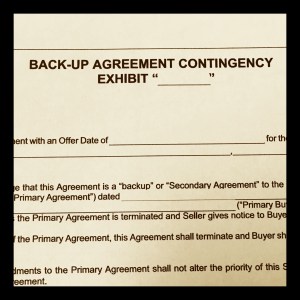
So how is it effectuated?  There’s a backup agreement exhibit in the Georgia Forms that’s used.  With the exhibit, the seller can sign because they are *not* selling the same property to two different buyers – they are granting an option to the second buyer should the first contract fall through.

With the due diligence period, the second buyer is able to terminate at any time, even before the backup contract moves into first position.  Thus, the backup buyer can continue to shop for a home and if they find the perfect place, simply terminate the backup contract.


Mary Anne Walser is a licensed attorney and full-time REALTOR, serving buyers and sellers in all areas of Metro Atlanta. Her knowledge of residential real estate and her legal expertise allow her to offer great value to her clients. Mary Anne serves on the Committee that drafts and reviews the contracts utilized by all REALTORS in the State of Georgia. In addition, she is a member of the Atlanta Board of Realtors, the Georgia Association of Realtors, the State Bar of Georgia and the Georgia Association of Women Lawyers. Contact Mary Anne at 404-277-3527, or via email: maryannesellshomes@gmail.com.

Share this:

  • Click to share on Facebook (Opens in new window) Facebook
  • Click to share on LinkedIn (Opens in new window) LinkedIn
  • Click to share on X (Opens in new window) X
  • Click to email a link to a friend (Opens in new window) Email
  • Click to print (Opens in new window) Print
  • Click to share on WhatsApp (Opens in new window) WhatsApp
  • More
  • Click to share on Reddit (Opens in new window) Reddit
Like Loading...
← Older posts
Newer posts →

  • Mary Anne Walser, REALTOR's avatar

Archives

  • June 2022 (1)
  • February 2022 (1)
  • April 2021 (1)
  • February 2021 (1)
  • August 2020 (1)
  • June 2020 (1)
  • February 2020 (1)
  • October 2019 (1)
  • January 2019 (1)
  • December 2018 (1)
  • November 2018 (1)
  • September 2018 (1)
  • August 2018 (1)
  • June 2018 (2)
  • April 2018 (1)
  • March 2018 (1)
  • February 2018 (1)
  • January 2018 (1)
  • November 2017 (1)
  • October 2017 (1)
  • September 2017 (1)
  • August 2017 (1)
  • July 2017 (1)
  • June 2017 (2)
  • February 2017 (1)
  • January 2017 (2)
  • November 2016 (2)
  • October 2016 (1)
  • September 2016 (2)
  • August 2016 (1)
  • July 2016 (1)
  • June 2016 (3)
  • May 2016 (3)
  • April 2016 (2)
  • March 2016 (1)
  • January 2016 (1)
  • December 2015 (1)
  • November 2015 (1)
  • October 2015 (2)
  • August 2015 (1)
  • June 2015 (1)
  • March 2015 (1)
  • February 2015 (2)
  • December 2014 (1)
  • August 2014 (1)
  • June 2014 (2)
  • January 2014 (3)
  • December 2013 (2)
  • September 2013 (1)
  • August 2013 (1)
  • July 2013 (2)
  • June 2013 (1)
  • April 2013 (1)
  • March 2013 (3)
  • February 2013 (3)
  • January 2013 (2)
  • November 2012 (2)
  • October 2012 (1)
  • August 2012 (2)
  • July 2012 (1)
  • May 2012 (1)
  • April 2012 (2)
  • March 2012 (3)
  • February 2012 (3)
  • January 2012 (2)
  • December 2011 (2)
  • November 2011 (3)
  • October 2011 (3)
  • September 2011 (3)
  • August 2011 (6)

Recent Posts

  • Where Sellers Go
  • 2022 A (real estate) Space Odyssey & Oddities
  • Renovate or Relocate!?
  • OWNING A PIECE OF ATLANTA HISTORY
  • Your Atlanta Pandemic Real Estate Plan

Enter your email address to subscribe to this blog and receive notifications of new posts by email.

Join 4,045 other subscribers
  • RSS - Posts
Follow Atlanta Real Estate Wisdom on WordPress.com

Mary Anne Walser, Realtor & Licensed Attorney

Keller Williams Realty
3650 Habersham Rd.
Atlanta, GA 30305
404-277-3527

Blog at WordPress.com.

  • Subscribe Subscribed
    • Atlanta Real Estate Wisdom
    • Join 82 other subscribers
    • Already have a WordPress.com account? Log in now.
    • Atlanta Real Estate Wisdom
    • Subscribe Subscribed
    • Sign up
    • Log in
    • Report this content
    • View site in Reader
    • Manage subscriptions
    • Collapse this bar
 

Loading Comments...
 

    %d