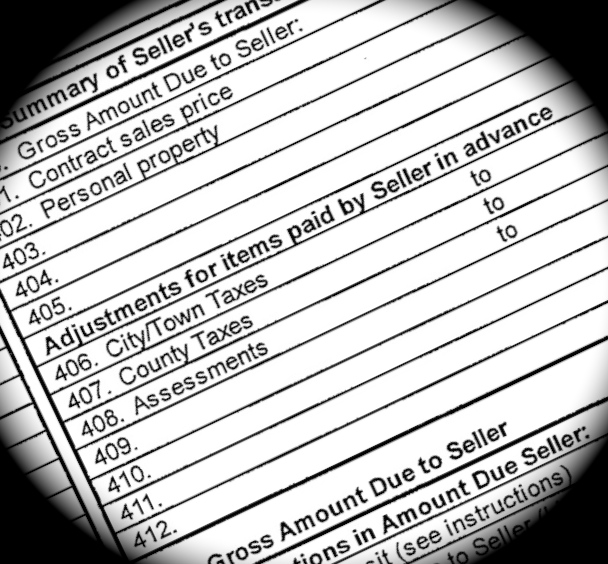
Chicken Little Goes to Closing

Tags

, , , , , , , , , , ,

HUD

The sky is falling! To hear lenders and closing attorneys tell it, the world as we know it comes to an end on October 3rd. That’s the day new regulations come into effect that govern the mortgage lending and closing process. Whether or not there’s mass bedlam, there are certainly changes that buyers and sellers of property should be aware of and prepared for, so this article will summarize them.

To understand how things are changing, it is important to know how the world works now. Today, sometimes the loan and closing statement will change the day of closing or even while parties are sitting at the closing table. Starting in October, that cannot and will not be possible anymore, at least as to every mortgage application received October 3, 2015 or later. The new rules require that a new document, the Loan Estimate, must be provided to the borrower within three days after loan application, and another new document, the Closing Disclosure, must be provided to the borrower at least three business days prior to closing. These apply to any mortgage loans with no exceptions. If there are changes to the deal, a new disclosure must be provided and the three-day waiting period starts all over. While previously the settlement statement was provided by the closing attorney and often at the last minute, with the new regulations the lenders themselves will likely be providing the statement directly to the borrower and they must confirm and document receipt by the consumer.

You can see how this can potentially cause big problems. “Stacked closings” are common now, in which the seller of one property uses those proceeds to purchase a new property in the next hour from a seller who may the following hour be buying a new property of their own. These back-to-back closings dependent upon one another for consummation are already tenuous at times. Imagine what the new three-day waiting requirement may do! So in practical effect and application, we Realtors must advise our clients of the following:

  • Delays are much more likely, particularly in the early days of implementation of the new regulations.
  • A seller will want to negotiate possession some number of days AFTER closing. While this has always been the case for a seller still living in the property they are selling, now it becomes even more crucial.
  • A buyer will want to commit to a lender as soon as possible in order to attempt to limit any delays. A buyer will want to be sure they choose a lender fully conversant with the new regulations and a lender who has a system in place to comply.
  • While some lenders can get a loan through underwriting and closed quickly, every loan is going to take longer with these new requirements, particularly at first. A cushion of 45 days between contract and close is advisable.
  • From a Realtor’s standpoint, any and all provisions of the contract should be tied up as early as possible. In particular, if there are monetary concessions during the due diligence period, those should be provided to the lender as soon and as early as possible. Even changes in the Realtor’s commission are part of the disclosure process and should be wrapped up as early in the process as possible.
  • While lenders are the primary front line, closing attorneys must also be in line with the new regulations. It is advisable to look for a closing attorney who does residential real estate closings regularly, has systems in place, and preferably is ALTA (American Land Title Association) best practices certified.

The new disclosures are designed to help consumers better understand the terms and costs of their mortgage loan; however, in one aspect the new disclosures are more confusing. The new rule prohibits lenders from disclosing a reduction that is commonly offered by the title insurance companies when a lender’s title policy and the borrower’s title policy are issued at the same time. Instead, there’s one lump sum disclosed; at closing the cost will actually be *less*. While that might result in a pleasant surprise for some at closing, those borrowers who are watching closely will likely be more confused about what, exactly, the title insurance is actually going to cost them at closing.

The home sale and purchase process can be confusing enough. If you are planning to make a move this year, be sure you plan for these new regulations and have trusted advisors guiding you through the process.

Mary Anne Walser is a licensed attorney and full-time REALTOR, serving buyers and sellers in all areas of Metro Atlanta. Her knowledge of residential real estate and her legal expertise allow her to offer great value to her clients. Mary Anne serves on the Committee that drafts and reviews the contracts utilized by all REALTORS in the State of Georgia. In addition, she is a member of the Atlanta Board of Realtors, the Georgia Association of Realtors, the State Bar of Georgia and the Georgia Association of Women Lawyers. Contact Mary Anne at 404-277-3527, or via email: maryannesellshomes@gmail.com.

Buyer’s Remorse

Tags

, , , , , , , , ,

First Home Blues Five Tips to Prevent Buyers Remorse First Home Blues: Five Tips to Prevent Buyers Remorse

We don’t talk about it a lot, but it is real: buyer’s remorse.  That sinking feeling that you rushed too quickly into your home purchase and that it is all a big mistake.  If remorse comes during the due diligence period (during which the buyer can terminate for any reason or no reason at all), you can still terminate your contract; if it comes after that period, you cannot terminate without facing potential legal penalty.

Buyer’s remorse is not just a problem for buyers – it’s a HUGE problem for a seller.  If a home is on the market, goes under contract, and then comes BACK on the market, there is a stigma attached to the property, whether or not the contract termination was called for by any logical reason.  This stigmatizing effect is why sellers want to be as certain as possible that the buyer is NOT likely to back out.  For instance, many sellers would never accept an offer from a buyer who has not yet seen the property.  Why, you ask, would any buyer MAKE an offer without seeing the house?  Well, in these days of low inventory and few houses to choose from, buyers sometimes HAVE to make an offer without seeing it.  I recently helped buyers moving back to Atlanta from Sweden; with their three children, they didn’t want to move into a rental only to then move again when they purchased a home.  They had lived in Atlanta previously, and knew the area in which they wanted to live – so they trusted me, working with their parents, to decide on a home and get it under contract for them.  Whether or not they’ll have remorse is yet to be determined.

But buyer’s remorse may be more rampant in these times of buyers rushing into purchases because there is such low inventory.  The first advice I give is to remember that almost EVERY buyer has remorse at some stage of the process.  Despite my vast experience with the phenomenon, I myself had buyer’s remorse with the purchase of my current home.  I went through with the sale – at the urging of my husband – and it’s the absolute best home for us that I could ever find or ever imagine.  So working THROUGH the buyer’s remorse and soldiering onward to closing is sometimes the answer.

And I also suggest to buyers feeling a bit of remorse that we examine if the remorse is illusory and fleeting or based on fact and true potential pitfalls.  For that, we take the buyer’s initial wants and needs list.  Does the home they chose fit what they said they were looking for?  Is there likely to be another home in their price range that would fit those needs and wants better?  Looking at the inspection – are there problems with the home that are not fixable, or has the buyer just been spooked by routine home repair items that aren’t a big deal?

There are several scenarios where buyer’s remorse seems to fester that usually IS fleeting and should be worked through: when the negotiations with the seller have been contentious and the buyer is left not having good feelings about the seller; when the buyer keeps looking at homes online and considering other homes; and when family and co-workers plant doubt.  Remember that the seller is LEAVING the home and it will be yours; remember from our search that homes can be and usually are much different in person than they are online; and remember that the family and co-workers did not engage in the search with you and don’t know all that went into the decision (it’s typically more realistic to consult with friends who have been with you through the process).

With a careful selection process, a great inspector and a great real estate agent guiding your way, any buyer’s remorse may be a typical and passing phenomenon.  Sometimes knowing that it’s common is all a buyer needs to know to get through it.  For the seller faced with a terminating buyer, it is a good practice to let future purchasers know if the termination was based on “cold feet” rather than a true problem with the house.  Always let us know your current thoughts and concerns – armed with all information, buyers can avoid remorse, and sellers avoid a lost buyer.

Mary Anne Walser is a licensed attorney and full-time REALTOR, serving buyers and sellers in all areas of Metro Atlanta. Her knowledge of residential real estate and her legal expertise allow her to offer great value to her clients. Mary Anne serves on the Committee that drafts and reviews the contracts utilized by all REALTORS in the State of Georgia. In addition, she is a member of the Atlanta Board of Realtors, the Georgia Association of Realtors, the State Bar of Georgia and the Georgia Association of Women Lawyers. Contact Mary Anne at 404-277-3527, or via email: maryannesellshomes@gmail.com.

Settling Into Your New Home

Tags

, , , , , , ,

Attractive Homes Clipart House Clipart

The papers are signed and you are moving in – congratulations!  And welcome to your new home.  Here are some things you should know about as a new homeowner.  First, you will get lots of coupons and offers in the mail.  Marketing companies watch the county records for new homeowners and your “change of address” form with the post office is also a trigger telling companies “Hey!  I’ve moved!  I am going to buy stuff!”  Chances are you held off purchasing new furniture, etc. until after closing.  But keep in mind that even if you want to buy things ahead of closing, it doesn’t hurt to ask the merchant if they have a discount for new homebuyers.  Many do, particularly furniture companies, and sometimes they’ll give you the discount even before you close.

Keep in mind also that you will notice things about your home that you did not notice before closing.  Perhaps a ding on the countertop, scratches on the floor, chipped paint, that sort of thing.  This is regular and normal for the most part.  Sometimes it isn’t.  For instance, recently I helped a purchaser buy an awesome condo.  After closing, when she moved in her toilet was leaking.  We didn’t notice it before; it didn’t come up in the inspection and we didn’t notice it in the walkthrough.  So guess what her housewarming gift from me was?  You guessed it.  I do have toilet visiting privileges now, and since it’s near Piedmont Park that might come in handy.  But here’s the point – there may be things wrong with the home you didn’t know about or your inspector didn’t catch.  Maybe the problem developed after the inspection and wasn’t noticeable during your walkthrough.  Know that this is normal.   Things like this are rarely worth suing over unless you think there’s been fraud.  The best approach is to be as diligent as you can and budget for some unforeseen circumstances – and above all, remember that “perfection” doesn’t exist (although some homes come close….)

Perhaps at the closing table you exchanged contact information with the home seller.  If both parties are open to it, then the information is exchanged; if not, the Realtors can help facilitate communication after closing if necessary.  Perhaps you as a buyer finds something the seller left behind, or have received mail that needs to be forwarded, or have questions about those things you did not notice prior to closing.  But there’s another reason you might wish to contact the seller.  At the closing table the attorney likely told you that if the property tax bill changed after closing such that the proration on the statement was inaccurate, then the parties should arrange a re-accounting amongst themselves if appropriate.  Personally I’ve never seen that happen, but it could; know that if the tax bill you receive is significantly higher than a previous proration on the closing statement, that it is appropriate to contact the seller for a re-accounting.  Know as a practical matter the seller is not likely to be excited about paying out more property tax money on a home that they no longer own (and of course rarely would a buyer contact a seller to REFUND prorated funds if the tax bill gets smaller, but that happens too).

Now here is a tip that we often forget to tell buyers – but it’s important.  You’ll get solicitations from companies that offer to send you a copy of your deed for a price – (prices I’ve seen range everywhere from $25 to $75).  These solicitations look “official” and give the impression that the only way you can get a copy of your deed is to pay that company to send you a copy – NOT SO.  The county will send you a stamped-filed deed after your closing for FREE and your Realtor can always pull your deed from the on-line records and send it to you at no cost.  There is no need to pay a third party company to send you a copy of your deed – hang on, it is coming your way for free.

But that is not the worst “official looking” correspondence you will get.  You may also get letters asking you to pay to file a homestead exemption form; again, you don’t have to pay.  The forms are free on the county websites and you can file for free.  (The homestead exemption gives you a break in property taxes if you live in and occupy your home).  You may also get correspondence from companies that want to split your mortgage payments into payments every two weeks rather than monthly.  If you want to prepay your mortgage, you can do that without the help of a third party who wants to charge you to help.  If you get a notification that your loan has been sold and you should send your payments to a new lender CALL your current lender before believing a document sent by mail.  The name of your mortgage company is easily available in public records, so a scammer can write you an “official looking” notice purporting to be from your lender that is in no way official.

So, keeping in mind these tips, reminders, and warnings, enjoy your new home!

Mary Anne Walser is a licensed attorney and full-time REALTOR, serving buyers and sellers in all areas of Metro Atlanta. Her knowledge of residential real estate and her legal expertise allow her to offer great value to her clients. Mary Anne serves on the Committee that drafts and reviews the contracts utilized by all REALTORS in the State of Georgia. In addition, she is a member of the Atlanta Board of Realtors, the Georgia Association of Realtors, the State Bar of Georgia and the Georgia Association of Women Lawyers. Contact Mary Anne at 404-277-3527, or via email: maryannesellshomes@gmail.com.

Let’s Sell Your Home this Spring

Tags

, , , , , , , , ,

We have had one of our busiest winters ever in the Atlanta real estate market.  With prices rising, many sellers realized that they again had equity in their homes and were ABLE to sell.  So those who had waited through the depressed housing years (since 2008) were suddenly in a position to be able to move.  Buyers were eager to purchase before home prices rose even more.   As a result, we had record home sales.  Demand in many areas of Atlanta exceed inventory, so some sellers who didn’t want to turn down  a great offer for their home even moved into a rental when they couldn’t find the “right” place to move into.  So there’s much pent up demand for homes to purchase this Spring.

If you are thinking of selling your home, there’s no time like the present.  The sooner the better, for many sellers wait until the Spring to sell – and as the season proceeds, you’ll have more and more competition.  We have a lot of “shadow inventory” poised to hit the market in late Spring and Summer; you’d like to avoid as much of that extra competition as you can.

Even with the buyer demand high, no one wants to overpay for a home so pricing is KEY.  We see competing offers for some homes, but those that are priced too high are receiving no offers at all and actually eventually net LESS.  The longer a home sits on the market, the less it is worth in the eyes of a buyer.  We can work with you to determine the ideal initial list price to bring you the highest return.

To prepare for listing, remember that first impressions are key.  A buyer will often decide from the street that they love or dislike a particular home; in fact, they will often tell us to “keep driving” if they don’t like the curb appeal.  So trim your trees and bushes and pressure wash your driveway, front walk, house, and deck or patio.  Clean and even repaint your front door and make sure the key works easily.  Have a nice, fresh welcome mat.  Buyers will linger with us at the front door while we open the lockbox for access, and they have extra time to notice these details.

Do your Spring cleaning NOW if you haven’t already.  And declutter, declutter, declutter.  Go through all your furniture, decorative items, and closets with a ruthless eye.  We have stagers and declutterers who help us prepare your home for sale – but start with the initial sweep immediately.  The savvy seller will remove half of all items in a closet and have nothing on the floor, for instance.  It sounds drastic, but it works.  Pack up everything you want to keep and take it to a storage unit or call in a company that will deliver a storage pod and then take it offsite for you.

Repaint to freshen up where needed; if you have any carpeting, get it cleaned.  If you know that a home inspector is going to find anything that needs to be fixed – go ahead and fix it now.  We have great contractor references if you need them.  It makes more sense to do the repairs first – a buyer may end up asking you to spend $300 on a repair you can do now for $100.

CALL US NOW if you are thinking of selling your home.  We can help you through the preparations and price your home correctly to sell at top dollar – it’s what we do!  And we’d love to hear from you.


Mary Anne Walser is a licensed attorney and full-time REALTOR, serving buyers and sellers in all areas of Metro Atlanta. Her knowledge of residential real estate and her legal expertise allow her to offer great value to her clients. Mary Anne serves on the Committee that drafts and reviews the contracts utilized by all REALTORS in the State of Georgia. In addition, she is a member of the Atlanta Board of Realtors, the Georgia Association of Realtors, the State Bar of Georgia and the Georgia Association of Women Lawyers. Contact Mary Anne at 404-277-3527, or via email: maryannesellshomes@gmail.com.

2015 Contract Changes

Tags

, , , , ,

Changes to the 2015 Georgia Realtor Forms

Did you know that the real estate contracts used by most agents in Georgia change every year?  Sometimes there are big changes, sometimes small changes – but every year without fail there are changes.  So if you purchased a home five years ago, say, the process now is a bit different than it was then.  The biggest change in recent years was the change from an “inspection period” to a “due diligence” period.  With an inspection period, the buyer had to find a “material defect” in the property that the seller would not fix in order to get out of the contract.  As you might imagine, that resulted in a lot of legal wrangling over what constituted a “material defect”.  So the Georgia Association of Realtors forms committee changed the contracts so that the “norm” now is the due diligence period, also called a “free look” provision.  During that period (typically anywhere from 7 to 14 calendar days) the buyer can terminate for any reason or no reason at all and get their earnest money back.

This year the changes were not quite as sweeping as that recent change, but there are changes; if you are selling or buying a house this year, you’ll want to know about them.  In the basic purchase and sale provision, GAR added a “special circumstances” provision that alerts the buyer that the seller must get third party approval before they are able to convey the property.  The categories of prior approval include: (1) approval by a bankruptcy court; (2) approval by a judge in a divorce proceeding; (3) approval by a lender in a short sale proceeding (when the sale of the property will not generate sufficient proceeds to pay all mortgages and liens against the property); and (4) other instances when the seller does not yet have title to the property, such as in an estate situation.

There are consumer brochures Realtors are encouraged to share with clients and which are mentioned in the Brokerage agreements, designed so that consumers are getting pertinent warning information.  If you are not provided them, you will want to ask for them: Protect Yourself When Selling a House, Protect Yourself When Buying a House, and Protect Yourself When Buying a Home to be Constructed.  There are brochures covering the hazards of lead based paint and of mold, and about purchasing a home in flood plain or a short sale or distressed property.  Finally, there are two new brochures: What to Consider When Buying a Home in a Condominium and What to Consider When Buying a Home in a Community with a HOA (homeowners’ association).

Bruce Jenner would be happy to know that in the various agreements that address potential discrimination, “gender identity” has been added to the list.  Previously, the “protected category” list consisted of race, color, religion, national origin, sex, familial status, disability, and sexual orientation.    What this means is that brokers, agents, and owners of properties are prohibited from discriminating against potential purchasers on the basis of any of these categories – which now include gender identity.

There are numerous other small changes.  One particularly interesting tidbit is that there is now “stated consideration” for the due diligence period.  In previous years, attorneys argued that the purchase and sale agreement’s due diligence provision did not create an enforceable contract because there was no consideration paid by the buyer for the privilege of holding the property under contract for a period of time with no obligation to buy.  The contract now states that the Buyer will pay the seller ten dollars for this “option” period.  In practice, the ten dollars NEVER CHANGES HANDS, but the recitation makes the provision enforceable.

You won’t be surprised that I recommend you consult a licensed Realtor (like myself) for a full explanation of the changes and intricacies in the GAR forms.  While I am of the opinion our state’s forms and contracts are some of the best and user friendly in the nation, you should always have expert professional advice in your home purchasing and selling decisions.

Mary Anne Walser is a licensed attorney and full-time REALTOR, serving buyers and sellers in all areas of Metro Atlanta. Her knowledge of residential real estate and her legal expertise allow her to offer great value to her clients. Mary Anne serves on the Committee that drafts and reviews the contracts utilized by all REALTORS in the State of Georgia. In addition, she is a member of the Atlanta Board of Realtors, the Georgia Association of Realtors, the State Bar of Georgia and the Georgia Association of Women Lawyers. Contact Mary Anne at 404-277-3527, or via email: maryannesellshomes@gmail.com.

2014 in review

The WordPress.com stats helper monkeys prepared a 2014 annual report for this blog.

Here’s an excerpt:

A San Francisco cable car holds 60 people. This blog was viewed about 2,400 times in 2014. If it were a cable car, it would take about 40 trips to carry that many people.

Click here to see the complete report.

SO YOU WANT TO BUY AN INVESTMENT PROPERTY

Investment Photo

My home buying guide is geared towards those buying a principal residence, but of course a good portion of our business are buyers who wish to buy an additional home or an investment property. Here are some considerations unique to that scenario.

First, it’s important for us to know WHY you are buying another property. Do you plan to renovate and flip it? Or do you plan to rent it out for income? The considerations are quite different for each – in this article we’ll address purchasing a rental.

If you are planning to RENT IT OUT for some period of time, be aware that it is probably NOT advisable to purchase a condo or townhome, because chances are you will NOT be able to rent it out. The reason is this: virtually every condominium ownership complex in Atlanta has a 24% or more rule under which no more than 24% of the units can be rented out at any given time. Since 2008 when the real estate market took a huge dive, that limit is reached in most complexes with a long, long waiting list of owners wishing to rent out their units. While things are loosening up now that the market has gotten better, it can still be very difficult in most complexes. In addition, many complexes have a rule that you must live in the condo or townhome for some period of time (typically a year or more) before you are even eligible to get a rental permit.

The purpose of the rental limits are to preserve future buyer’s ability to get a loan to purchase in the complex. Underwriting guidelines usually specify that a certain percentage of units must be OWNER OCCUPIED in order for the lender to underwrite a loan for a purchaser. If there are no rental limits, then, the units must be purchased with cash or alternative financing, making those units much less marketable and therefore less valuable. Note that some townhomes are “fee simple” rather than condominium ownership, and you WOULD be able to rent out a fee simple townhome. The difference is that in condominium ownership, you own everything within your walls but not the exterior of the home or the ground it sits on – those are owned in concert with everyone else who owns in the complex. In fee simple townhome ownership, generally speaking you own your home, the roof, and the ground it sits on but you are simply attached to other homes. With fee simple ownership, there is rarely any restrictions on the owner being able to rent out a unit. But condominium ownership is much more common than fee simple.

Another important consideration is whether you are going to ACTIVELY MANAGE or hire a professional property management company to handle renting it out for you. If you are serving as the direct landlord, you want a property that is CLOSE TO WHERE YOU LIVE. But if you are hiring someone else to do that for you, where the property is in relation to where you live becomes less important.

Early on, narrow down the neighborhoods or areas you are interested in. Be sure to consider convenience, schools, crime, and overall appreciation potential (this is where your Realtor comes in very handy). We will pull homes like the homes you are looking out so you will know about what rent you’ll be able to command for a given property. Compare the rent you’ll get with your monthly mortgage payment and expenses (a good rule of thumb is a 10% monthly management fee if a company is managing for you; and another 10% for repairs and other expenses). Keep in mind that there may be gaps in between tenants when you will have no income from the property.

If you pick carefully and choose a home in an area that appreciates, you can make a great return on rental property. Just be prepared for the risks involved. No matter how careful your background checks, tenants can go “bad”. They can tear up your house and refuse to pay rent. Then you must pay to fix the house and pay legal fees to throw them out. Rental properties are not for the faint of heart. But they can also be a great way to diversify your portfolio and make a great return!

Mary Anne Walser is a licensed attorney and full-time REALTOR, serving buyers and sellers in all areas of Metro Atlanta. Her knowledge of residential real estate and her legal expertise allow her to offer great value to her clients. Mary Anne serves on the Committee that drafts and reviews the contracts utilized by all REALTORS in the State of Georgia. In addition, she is a member of the Atlanta Board of Realtors, the Georgia Association of Realtors, the State Bar of Georgia and the Georgia Association of Women Lawyers. Contact Mary Anne at 404-277-3527, or via email: maryannesellshomes@gmail.com.

 

The RIGHT WRONG Things

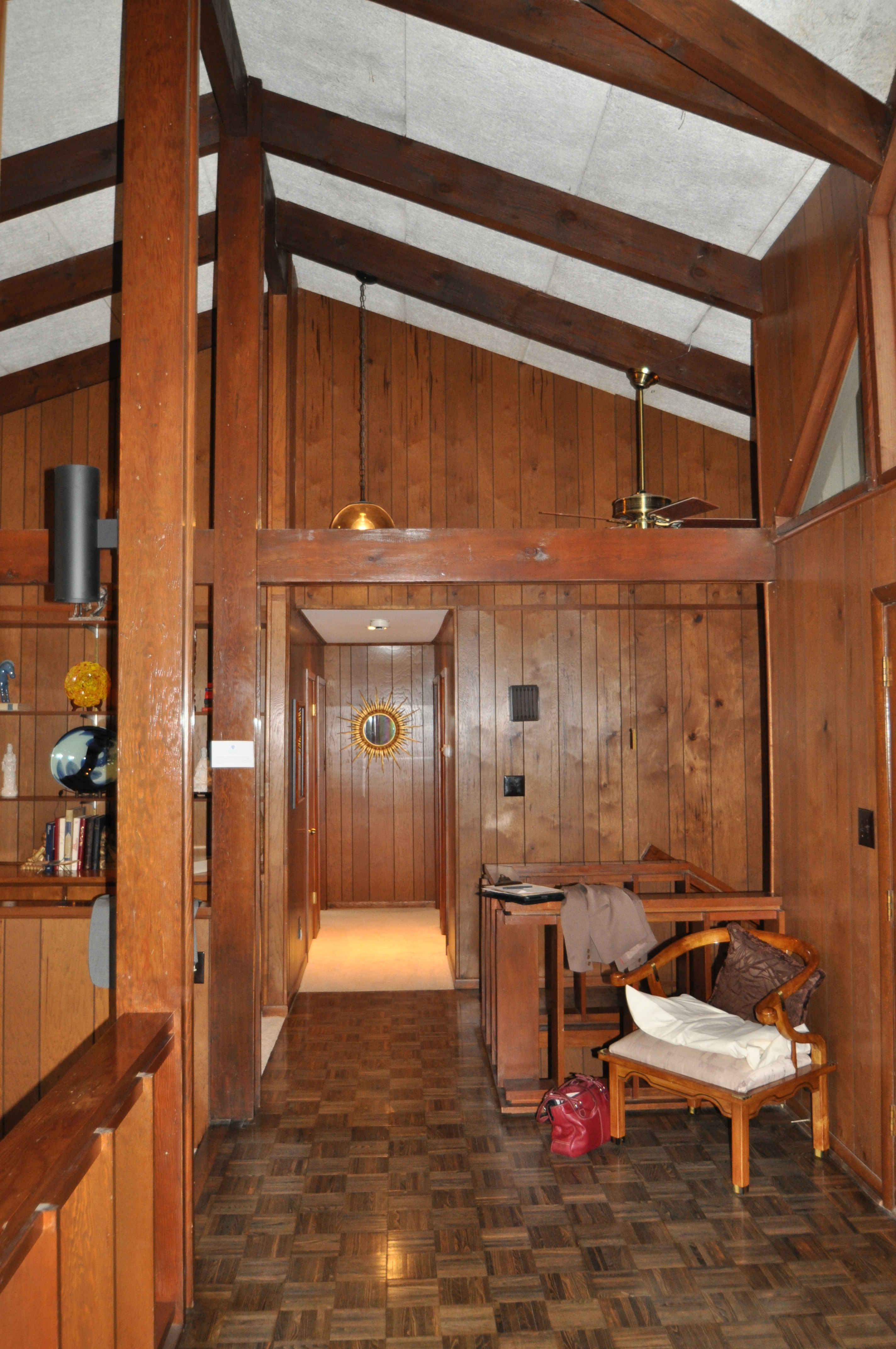
SENTINEL KITCHEN WINDOW VIEW SENTINEL POST 031 SENTINEL POST 051When my husband and I walked into our current home the first time, it was a sad sight to see.  Shag carpeting, dark wood paneling, old formica countertops.  And yet we knew it was “the” house for us.  How?  It was UGLY.  And yet the right things were wrong with it.  The carpeting we could tear out.  The dark wood paneling could be taken out or painted over.  Walls could be moved and removed.  Countertops could be replaced.  The home’s flaws allowed us to put our signature on the home and make it our own.  We loved the soaring ceilings, floor to ceiling glass, and huge acre lot with tons of trees.

But another home we looked at was much prettier.  Already renovated in a style we liked.  We could have moved right into that home.  But the WRONG things were wrong with that home.  The driveway was steep.  There was no garage, and due to the topography (steep drop-offs beside the home) no easy way to put one in.  Not enough guest parking – and guests would have to climb up that mountainous driveway.  So while it was beautiful – and we went back to it several times – it was *not* the home for a couple who love to entertain and really want a garage.

This was our experience in the doctrine of the “right wrong things”.

Now, the right wrong things for us would have been just the “wrong things” for some other buyer.  Say, one who didn’t want to have to do ANY renovation.  Or a buyer who couldn’t see past ALL the work that needed to be done (and there was a lot!)  The things that were “RIGHT” for us would have been wrong for someone else.  Not everyone wants a large lot to care for, and not everyone appreciates the 1970s aesthetic.

When YOU are looking for a home, don’t expect to find the house that is exactly right in every aspect.  It doesn’t exist!  Look for the home that has the “right things wrong with it.”

First, determine whether you are willing to do any renovation at all.  If so, the following might be the right wrong things:  old carpeting, Formica countertops, loud paint colors you don’t like.  These are things that are easily changed (of course, if you don’t want to do any work at all, these are just “wrong” things).

Other right wrong things might be a yard that is in disarray but with a little landscaping could be great; or a carport that  could be converted to a garage (if that’s a “right” thing for you).  It’s also important to know, however, the WRONG wrong things.  Maybe a quiet street is important to you.  If the home you’re seeing is on a BUSY street, that’s the “wrong” wrong thing – something that CANNOT be changed, no matter how hard you try.  Put together your list of the WRONG wrong things, and do NOT GO SEE A HOME that has those things.  You’ll save yourself a lot of time and frustration.  Other “wrong” wrong things might be: a home in the wrong school district.  A home without a fireplace if you’ve always dreamed of having one.  A home in a bad n’hood if safety is paramount to you.  You see – the “wrong” wrong thing is something that cannot be changed.

So, before you go to look at houses, put together a quick list.  What are the RIGHT WRONG THINGS?  And what are the “wrong” things that you cannot abide – let’s eliminate those houses before we start, but let’s NOT eliminate those that have the RIGHT wrong things.   Determining your right wrong things could be the way to get a deal on a house – and to have the flexibility to make it your own!

Mary Anne Walser is a licensed attorney and full-time REALTOR, serving buyers and sellers in all areas of Metro Atlanta. Her knowledge of residential real estate and her legal expertise allow her to offer great value to her clients. Mary Anne serves on the Committee that drafts and reviews the contracts utilized by all REALTORS in the State of Georgia. In addition, she is a member of the Atlanta Board of Realtors, the Georgia Association of Realtors, the State Bar of Georgia and the Georgia Association of Women Lawyers. Contact Mary Anne at 404-277-3527, or via email: maryannesellshomes@gmail.com.


WE HAVE AN OFFER! NOW WHAT?

Prices are rising rapidly in Metro Atlanta and we do not have enough homes to sell.  Buyers are frustrated by the lack of inventory and how quickly the good homes get snatched up. Let’s say we have put your home on the market (and I’d love to do that).  Say you’ve priced your home to sell.  You’ve painted the walls a pleasing neutral color and staged perfectly.  You’ve made it readily available for agents to show.  In this fast moving market, we should have an offer within days or a few weeks.  If there’s no offer within a few weeks, they we must re-evaluate why – a subject for another article.  But presuming we’ve gotten it right, offers should be coming in!  How do we respond?

If we get an offer immediately upon listing, we may have a very hot property (one indicator is that we also have a lot of showings right away).  This is happening a LOT currently.  If we’re getting multiple offers, lucky you!  We could have a bidding war.  One way to handle this is to say that we’ll be responding to all offers at some point in the near future.  It’s best to give a date certain.  Say we list on a Wednesday, and it’s clear we’re going to get more than one offer.  I can say “seller will respond to all offers by Tuesday at 5pm”.  This allows the weekend for showings to more potential buyers and allows the open house to pull in more potential buyers (if we’re holding open houses at your home).   If an offer comes in the first day and you respond to it, you don’t give other potential buyers the chance to bid up the price.  That said, if the first offer is excellent and solid and one you just can’t refuse, at times the best thing to do is to move quickly on that first offer and enter a solid contract.

But if we are soliciting multiple bids and get them, once they are all in we review them carefully, comparing all terms.  The “best” offer may not be the “highest” price.  You’re looking for a buyer who will not ask for excessive concessions during the inspection period and who will surely make it to the closing table with no financial difficulty.  Thus, a cash offer (with proof of funds, of course) is typically a better offer than an offer contingent on a loan.  An “as is” offer (indicating that the buyer will not be asking for repairs) is better than one with the right to ask for inspection repairs.  An offer contingent on the sale of another home is not as desirable as one that is not.  We take all of these things into account in deciding which offer is the “best” and the one you want to respond to.  Unless one bid is so strong you want to nail the contract down and sign it as it is written, you will have the opportunity in the counteroffer to counter any terms you do not like, including price.

Now, in contrast to the multiple bid situation, if yours is a home that is not receiving immediate multiple bids, then I typically recommend responding VERY quickly to a bid on the property.  Strike while the iron is hot!  Buyers who must wait a day or two for the seller to respond sometimes lose their enthusiasm and start having second thoughts.  It’s smart to respond quickly to a good offer to keep the momentum going if your home has been on the market for a while or we don’t believe that a bidding war is possible or probable.

We’ve been concentrating on good offers and how to respond – but it’s important to note that you should respond to every offer that comes in, good or bad.  Some inexperienced buyers and even some seasoned veteran buyers just feel that they have to “try” a lowball offer.  Don’t be offended.  Answer it anyway, unless it is just truly ridiculously outside the realm of possibility.  I’ve seen unreasonable buyers get very reasonable in the end and jump to a high number that made my seller very happy.  And everyone’s idea of what IS a “low” offer differs.  Even if you respond at list price, respond.  Play ball.  Having an offer , even if you only have one, is a wonderful thing.  If it’s not going to work out, you should know within very short order and it so it’s not a big time waster.  If fact, if the initial offer is too low, we can respond verbally until the buyer gets to a more reasonable number.

Our Atlanta market has been sizzling hot this summer; well priced properties sell quickly and with multiple bids.  If you price right and stage well, your home will be one of the “hot” properties.  How to respond to offers, single or multiple, is an art as well as a science; with a little forethought and help from a licensed Realtor, you will be SOLD in no time.  Call me today if you or someone you know has been thinking about selling!

Mary Anne Walser is a licensed attorney and full-time REALTOR, serving buyers and sellers in all areas of Metro Atlanta. Her knowledge of residential real estate and her legal expertise allow her to offer great value to her clients. Mary Anne serves on the Committee that drafts and reviews the contracts utilized by all REALTORS in the State of Georgia. In addition, she is a member of the Atlanta Board of Realtors, the Georgia Association of Realtors, the State Bar of Georgia and the Georgia Association of Women Lawyers. Contact Mary Anne at 404-277-3527, or via email: maryannesellshomes@gmail.com.

 

TAX BREAKS FOR HOMEOWNERS

Tags

, , , , , , ,

Congratulations, homeowner!  In addition to the pride of owning your own property, there are many subsidiary benefits, including TAX benefits.  With April 15th fast approaching, let’s take a look at some of these.  You want to be sure that you don’t miss any of them if they apply to you.

One huge benefit is the mortgage interest deduction.  Basically, the interest you pay on your mortgage is fully deductible from your taxes.  In the first years of your mortgage, most of what you are paying is interest, so this benefit can be huge!  Your mortgage company will send you a statement showing the exact amount you paid in nterest in 2013, and you can use this information to save a bundle on your taxes.

And, if you purchased your home this year, your closing costs may also be tax deductible – even if all or a portion of them were paid by the seller.  As with all of these deductions, be sure to consult your tax professional about the proper way to claim the benefit and the appropriate amount.

Here are some smaller, but still significant tax savings that are good for your 2013 taxes but which may *not* be available in 2014 (unless Congress decides to extend them), so be sure to take advantage of them this tax season if at all possible.

  • Energy-Efficiency UpgradesThis is a tax credit, which reduces what you owe dollar for dollar. The types of upgrades that meet the criteria include new exterior windows, insulation, exterior doors, and roofing.  The tax credit is capped at $500 (less in some cases), but you’re likely to save even more in the long run – by having lower utility bills. 
  • Debt Forgiveness.  If you sold your home in a short sale or foreclosure last year, your lender likely forgave at least a portion of your mortgage debt.  The Mortgage Debt Forgiveness Act will save you from having to pay taxes on at least some of the debt forgiveness.  (Without the Act, the debt forgiveness would count as income).   
  • PMI Deduction.  Private mortgage insurance, or PMI, is sometimes required by lenders for homebuyers who make a down payment of less than 20 percent. PMI protects the lender in the event the borrower stops paying on the loan. PMI premiums were deductible from your taxes in 2012 and 2013.

While Congress has allowed the above deductions to expire for 2014, and must reinstate them if they are to apply in the future, the capital gain deduction stands.  Homeowners who have owned and occupied their homes for at least two of the past five years do not have to pay taxes on the gain. The amount of you can gain (tax-free) from such sales varies, depending on your marital status. Married people can earn up to $500,000 on a sale without paying tax on the earnings, and single people can earn up to $250,000 without paying any federal tax.

One more benefit to mention: the Home Office Deduction has been simplified for 2013.  If you have a home office, rather than using a 43-line form (as required in years past), the new method allows home-based workers to simply claim $5 per sq. ft. for up to 300 sq. ft. For example, if your home office is a 10×10 ft. room (100 sq. feet), that’s $500 you can deduct.  Keep in mind – the basic requirements for claiming the home office deduction haven’t changed. Your home office still must be used exclusively for business purposes and on a regular basis.

Whether you have a single-family home, townhouse, or condo, there are tax benefits available to you, but it’s tough to take advantage of them if you don’t know all the details.  Seek help from a good accountant or tax advisor.   

Mary Anne Walser is a licensed attorney and full-time REALTOR, serving buyers and sellers in all areas of Metro Atlanta. Her knowledge of residential real estate and her legal expertise allow her to offer great value to her clients. Mary Anne serves on the Committee that drafts and reviews the contracts utilized by all REALTORS in the State of Georgia. In addition, she is a member of the Atlanta Board of Realtors, the Georgia Association of Realtors, the State Bar of Georgia and the Georgia Association of Women Lawyers. Contact Mary Anne at 404-277-3527, or via email: maryannesellshomes@gmail.com.