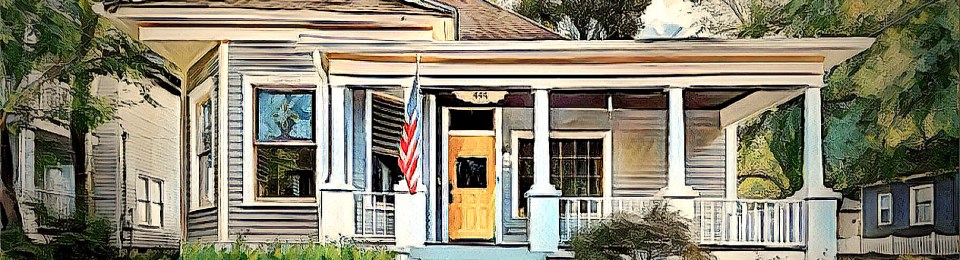
Despite our Civil War history (the burning of Atlanta), Atlanta still has many historic neighborhoods. Definitions vary, but generally speaking in a home built in 1925 or before (i.e., those homes which are approximately 100 years old or more) is “historic“. (I am speaking of older homes that aren’t necessarily on any historic register, but which are historic in character, age, and appearance). When we sell such a home, we want to be sure that buyers understand that they typically cannot expect the features of a new home. Many parts of the house may be original (even though, of course, many historic homes have been renovated, sometimes multiple times, which can carry its own concerns).
Recently we sold a gorgeous home in Grant Park that was built in X. The home at one point in its history had been in foreclosure, but had subsequently been purchased, loved, and thoroughly renovated by its current owners. Although they knew a lot about the house, there is of course a lot they did not know or could not know. (Typically when a home is sold out of foreclosure, no information is provided about the house at all and it is sold “as is“). So we were dealing with a lot of knowns, but also a lot of unknowns.
When you purchase an historic home, here are some things to look out for: consider hiring an inspector who is familiar with these older homes. Although a good inspector can probably handle reviewing most of the issues that might arise, still an inspector with specific experience might be best.
For instance, in Grant Park you might ask for an inspector who has previously inspected (successfully) homes in that same neighborhood or at least homes and neighborhoods of similar vintage. Here are some specific considerations you will want them to address, and other things you will wish to consider:
- Foundation and structural integrity. You might consider that a home that has stood for 100 years is probably relatively solid, particularly if there’s no evidence of settlement or of cracking. (Of course, the floors are probably uneven as they are in most older homes. This alone is not necessarily evidence of structural problems.) But there may be evidence that isn’t obvious to the untrained eye. Your inspection should take a close look at any structural supports for the main structure, and any evidence of termite damage. I once had an inspector tell me that there are three types of homes in Georgia: those that have had termite, those that have termites, and those that will have termites. In other words, termites are ubiquitous in Georgia and we must always look out for them. Make sure your inspector takes a close look and ask your seller to supply a year-long termite bond at closing.
- Plumbing. Also typical of older homes is that the cast iron sewer line to the street might be original, and if so might be rusting or overrun with tree roots. Definitely consider having a sewer line inspection, which is typically separate from an additional charge to the general home inspection. A check of the entire plumbing system is important.
- Electrical. Definitely check to see that the electrical has been updated and if so, when. Almost always in these older homes electrical has been updated from the original. Although I personally did buy a home that had a fuse box early on in my career – I simply had it replaced with a breaker box. It’s not unusual to find electrical components from multiple eras in one home, and you want to be sure the system is safe.
- Lead based paint. Lead at one time was a major ingredient in paint, and can be a health hazard.
- Asbestos. Some of the older roofs may have asbestos shingle, the siding may be asbestos siding, or there may be asbestos tile in the home. The concern here is that when the time comes to remove the asbestos material it is a more difficult and costly job because of the nature of asbestos. When asbestos becomes loose (called friable) it is a health hazard. Therefore have your inspector look for evidence of asbestos in your home. (Many inspection reports will show that there is asbestos tape around some of the HVAC ducting in an older home. This is not as concerning, as asbestos tape can simply be covered up. But the other forms of asbestos – flooring tiles, siding, and roofs are more of an issue.)
- Plaster walls. Homes which are that old typically will have plaster walls. Currently, of course, we use drywall, which is more easily hammered into and patched when damaged. Plaster walls can crack and you must be extremely careful when hanging things on plaster walls. And many of the older homes, you will see picture railings several feet from the ceilings (which are typically very high). These were used with wires to hang pictures from so that nails would not have to be driven into the plaster. You may wish to consider using picture railings for your plaster walls, or at least being extremely careful and having a professional who is familiar with blaster hanger wall art and hangings for you.
In addition to these inspection issues, it is always good to get a survey of an historic home. In Atlanta, years ago, there often was little concern or regard for boundary lines, particularly in some areas of town. A home might have been built on a boundary line with no repercussion. So getting a survey is always a good idea if your seller cannot supply one.
Owning a piece of Atlanta history is an amazing experience – call us when you’re ready to call one of the city’s historic homes your new home!
 Atlanta Real Estate Wisdom